

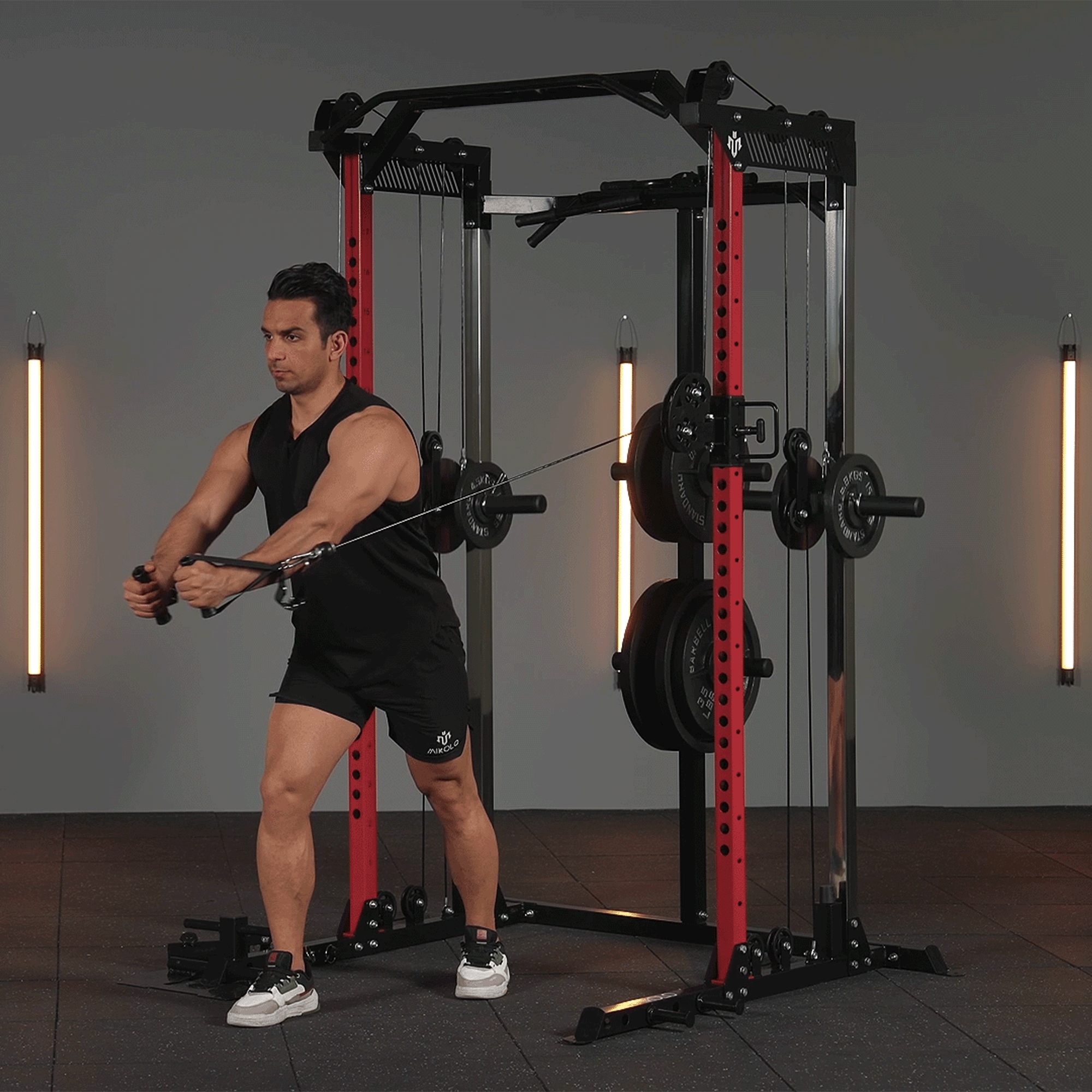












When it comes to building a thick, well-defined back and sculpted arms, the attachments you choose can make all the difference. Among cable handles, the V-grip handle stands out for its unique ability to target the mid-back and biceps with optimal muscle engagement and joint safety. In this article, we’ll dive into what the V-grip handle is, its key benefits, how to use it correctly, common mistakes to avoid, and even share a personal insight to help you integrate it seamlessly into your routine.
What Is a V-Grip Handle?
A V-grip handle is a cable attachment shaped like the letter “V,” with two short, parallel handles that allow for a neutral (palms-facing/each-other) grip. You’ll often see it on lat-pulldown and seated-row machines, providing a closer hand position than a wide bar but a more natural wrist alignment than straight bars.
Related Terminology (LSI)
-
Neutral-grip cable handle
-
Close-grip V-bar
-
Plate-loaded row attachment
-
Lat pulldown V-bar
Key Benefits of the V-Grip Handle
-
Enhanced Mid-Back Activation
The neutral grip minimizes shoulder rotation, directing the load into the rhomboids and middle trapezius. This builds thickness in the center of the back without overworking the lats. -
Joint-Friendly Wrist Position
Unlike a straight bar, the V-grip’s hand orientation keeps wrists in a natural, mid-position, reducing stress on the wrists and elbows—especially valuable for those with tendon issues. -
Improved Biceps Engagement
The closer hand spacing means the biceps have to work a bit harder to complete the pull, giving your arms an extra stimulus alongside your back work. -
Versatility Across Movements
Beyond seated rows and pulldowns, you can use the V-grip for standing cable rows, high pulls, and even unilateral pulls when paired with a single-pulley setup.
How to Use the V-Grip Handle Correctly
-
Seated Cable Row
-
Sit tall with slight lumbar arch, feet planted on the platform.
-
Grasp the V-grip, pull the handle straight back, leading with your elbows.
-
Squeeze your shoulder blades together at peak contraction; avoid shrugging.
-
Control the return—don’t let the weight slam forward.
-
-
Lat-Pulldown
-
Align the pulley above your head, knees secured under the pad.
-
Lean back no more than 10–15°, pull the V-grip to upper chest.
-
Keep elbows tucked to emphasize rhomboid activation.
-
-
Standing Cable Row
-
Set pulley at mid-torso height, hinge at hips with slight knee bend.
-
Pull handles towards your waist, focusing on scapular retraction.
-
Common Mistakes to Avoid
-
Rounding the Back: Keep your spine neutral; use core tension to stabilize.
-
Using Momentum: Swinging through the body reduces muscle tension and increases injury risk.
-
Partial Range of Motion: Fully extend and contract on each rep for maximum benefit.
-
Neglecting Grip Strength: If the handle slips, chalk or straps can help maintain focus on the back.
Variations & Progressions
-
Single-Arm V-Grip Row: Attach one side of the V-grip to a single pulley to isolate each side of the back.
-
Tempo Training: Use a 3-second eccentric (lowering) phase to boost muscle tension and control.
-
Drop Sets: After reaching failure, switch to a straight bar and immediately continue for added volume.
A Personal Note on the V-Grip Handle
Early in my training, I found my back development plateaued despite heavy straight-bar rows. Introducing the V-grip handle into my seated rows sparked noticeable thickness across my mid-back within weeks. Because my wrists felt more secure, I could focus entirely on the muscle contraction instead of worrying about grip discomfort. That extra mind–muscle connection propelled my back growth more than any weight jump ever did.
Putting It All Together
The V-grip handle is more than just another attachment—it’s a tool for targeted back development, superior joint safety, and enhanced arm engagement. By incorporating it wisely into your pulldowns and rows, dialing in proper form, and experimenting with tempo and unilateral variations, you’ll unlock new levels of back thickness and strength. Give it a try on your next pulling day, and feel the difference that a neutral, V-shaped grip can bring.


Leave a comment
This site is protected by hCaptcha and the hCaptcha Privacy Policy and Terms of Service apply.