La máquina Smith es un elemento básico en muchos gimnasios: una barra fija sobre rieles de acero, que se mueve solo hacia arriba y hacia abajo en línea recta. A diferencia de las pesas libres, guía tu movimiento y viene con ganchos de seguridad incorporados para que puedas atrapar la barra cuando lo necesites. Esa es una gran razón por la que atrae tanto a principiantes como a levantadores experimentados.
La máquina Smith te da más control y seguridad que las pesas libres, especialmente si entrenas solo. Puedes bloquear la barra en su lugar con un giro rápido de las muñecas, por lo que no necesitas un observador si no puedes terminar una repetición. La trayectoria fija también te permite concentrarte en músculos específicos sin preocuparte por el equilibrio todo el tiempo.
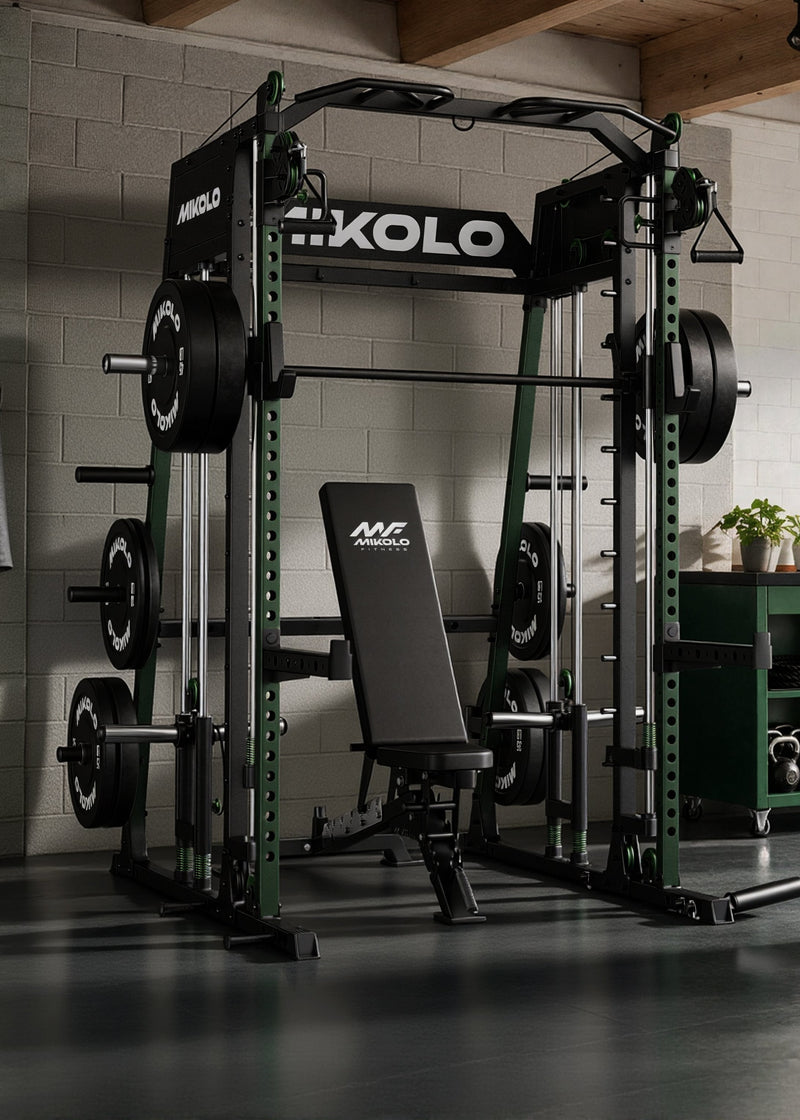
Para los usuarios de gimnasios en casa, los modernos sistemas de máquina Smith todo en uno combinan múltiples estaciones —como cables, barras de dominadas y almacenamiento— en una configuración compacta, lo que los convierte en una opción práctica para construir un espacio de entrenamiento completo.
Una vez que le tomes el ritmo a la máquina Smith, puede realmente potenciar tus entrenamientos. Verás cómo funcionan las diferentes máquinas, qué ejercicios trabajan tus piernas, pecho, glúteos y espalda, y cómo evitar los errores comunes que ralentizan tu progreso.
Entendiendo la máquina Smith
La máquina Smith destaca por su trayectoria de barra fija y sus características de seguridad. Los rieles guiados controlan el movimiento de la barra, y puedes bloquearla en su lugar en cualquier momento con simples ganchos a lo largo del riel.
Componentes y diseño principales
En esencia, la máquina Smith es una barra conectada a rieles verticales de acero; estos rieles suelen ir desde el suelo hasta aproximadamente dos o dos metros y medio de altura. La barra se desliza suavemente hacia arriba y hacia abajo sobre estos rieles.
La barra suele pesar entre 15 y 25 libras, lo que es menos que una barra olímpica estándar (que pesa 45 libras). Vale la pena conocer el peso de la barra de tu máquina para poder realmente seguir tus levantamientos.
Los ganchos de seguridad están espaciados cada pocos centímetros a lo largo de los rieles. Gira la barra y podrás engancharla a cualquier altura, perfecto si estás cansado o pierdes el control a mitad de la serie. La mayoría de las máquinas también tienen topes ajustables para evitar que la barra caiga demasiado bajo.
Mecánica de la barra guiada
La barra solo se mueve verticalmente (a veces con un ligero ángulo hacia adelante). No puedes moverla hacia adelante, hacia atrás o de lado a lado. Esta trayectoria fija significa que no tienes que equilibrar el peso como lo harías con pesas libres.
Cada repetición sigue la misma ruta, de principio a fin. Para bloquear o desbloquear la barra, simplemente gira un poco las muñecas y se enganchará o soltará de los ganchos de seguridad.
Debido a que la máquina se encarga de la estabilización, los músculos de soporte más pequeños no están tan involucrados como lo estarían con las pesas libres. La máquina Smith maneja la posición de la barra por ti.
Comparación con las pesas libres tradicionales
Con las pesas libres, estás equilibrando y controlando la barra en todas las direcciones. Tus estabilizadores están trabajando horas extras para mantenerla firme. La máquina Smith te quita ese trabajo.
Las pesas libres te permiten ajustar la trayectoria de la barra para que se adapte al movimiento natural de tu cuerpo. La máquina Smith te encierra en una línea. Eso es útil para aislar músculos, pero puede que no coincida con la forma en que tus articulaciones quieren moverse.
Si las cosas van mal con las pesas libres, puedes escapar soltando o apartando la barra. En la máquina Smith, simplemente gírala y bloquea la barra donde estés, una salida súper rápida.
Consejos de operación segura
Configurar correctamente, usar las características de seguridad y mantener una buena forma son los principios básicos para mantenerse seguro y fortalecerse con la máquina Smith.
Configuración y posicionamiento adecuados
Siempre ajusta la altura de la barra antes de añadir peso. Para sentadillas, coloca la barra a la altura de los hombros. Para el press de banca, querrás que tus brazos estén ligeramente flexionados cuando estés acostado.
Asegúrate de que tu cuerpo se alinee naturalmente con la trayectoria de la barra. Si tienes que girar o estirar incómodamente, ajusta hasta que se sienta bien.
Verifica dos veces los topes de seguridad, son tu última línea de defensa. Colócalos justo debajo de tu punto más bajo en el movimiento.
Dale un rápido vistazo a la máquina. La barra debe girar suavemente y todos los pasadores deben estar bloqueados.
Activación de los bloqueos de seguridad
Los ganchos de la máquina Smith bloquean la barra en su lugar. Para desbloquear, levanta un poco la barra y gira las muñecas, normalmente un pequeño giro hacia adelante o hacia atrás.
Es inteligente practicar este movimiento de bloqueo sin peso primero. Quieres que sea algo automático en caso de que te quedes atascado a mitad del levantamiento. El giro y bloqueo deben ser automáticos.
Mantén los topes de seguridad a la altura correcta para cada ejercicio. Deben atrapar la barra si fallas, pero no bloquear tu rango de movimiento. Pruébalos con una carga ligera para asegurarte de que estén bien colocados.
Técnicas de levantamiento correctas
Contrae tu abdomen en cada repetición. Esto protege tu espalda y ayuda con el equilibrio, aunque la máquina esté guiando la barra.
Usa un ritmo constante: baja el peso durante 2-3 segundos, levántalo en 1-2. No lo dejes caer con la gravedad.
Mantén los pies planos. No dejes que tus talones se levanten durante las sentadillas ni empujes con los dedos de los pies en el press de banca.
Recuerda respirar: inhala mientras bajas, exhala mientras empujas. ¿Agua tu respiración durante toda la serie? No es buena idea.
Errores comunes a evitar
No te vuelvas flojo con tus estabilizadores, la máquina ayuda, pero aún necesitas involucrar tu core y músculos de soporte.
Resiste la tentación de poner demasiado peso demasiado rápido. La trayectoria fija puede hacer que las cosas se sientan más fáciles, pero tus articulaciones podrían no estar de acuerdo.
No te inclines sobre la barra ni uses el impulso para moverla. Ese no es el objetivo del ejercicio.
Y en serio, nunca te saltes el ajuste de los topes de seguridad. Incluso los profesionales pueden fallar una repetición, y querrás ese respaldo.
Variedades de máquinas Smith
Las máquinas Smith vienen en varias versiones, y el diseño puede cambiar mucho la sensación de levantar la barra. El ángulo de la pista, el sistema de contrapeso y las características adicionales juegan un papel importante en qué modelo se adapta a tus necesidades o espacio.
Máquinas híbridas multifuncionales
Las máquinas Smith híbridas combinan la barra Smith con otras estaciones de entrenamiento, lo que te ofrece más opciones en una sola configuración grande. Aquí es precisamente donde los sistemas todo en uno destacan para los gimnasios en casa.
Adiciones típicas: cruces de cable, barras para dominadas, almacenamiento de discos, a veces incluso una jaula de potencia a un lado.
Ejemplos de configuraciones:
Máquina Smith todo en uno Mikolo | Mikolo Anubis 2.0 (doble pila de pesas)
Son excelentes para ahorrar espacio en gimnasios en casa; obtienes mucha variedad de ejercicios sin comprar toneladas de equipo por separado. Pero son más caros y ocupan más espacio que una máquina Smith básica.
Máquinas Smith lineales estándar
Las máquinas Smith lineales estándar mueven la barra hacia arriba y hacia abajo en línea recta, sin ningún ángulo. Esta trayectoria rígida no siempre coincide con la forma en que tu cuerpo quiere moverse.
Son sólidas para elevaciones de pantorrillas y encogimientos de hombros, ya que esos movimientos ya son bastante verticales.
Pero para sentadillas o press de banca, esa línea recta puede sentirse un poco forzada. Podrías tener que ajustar tu postura o la posición de la barra, y sinceramente, no siempre es cómodo en comparación con las pesas libres.
La mayoría de los gimnasios optan por este tipo: son más baratas y no requieren mucho mantenimiento.
Máquinas Smith con pista angular
Las máquinas Smith angulares inclinan la trayectoria de la barra en un ángulo de 7 a 12 grados. Esa inclinación se acerca más a cómo se mueve realmente tu cuerpo durante los levantamientos grandes.
El ángulo hace que las sentadillas se sientan más naturales: tus rodillas y caderas se mueven mejor, y hay menos tensión en tus articulaciones.
El press de banca también se beneficia, ya que la barra se mueve en un ligero arco, más parecido a lo que obtendrías con pesas libres.
¿Desventaja? No puedes cambiar el ángulo. Lo que es genial para las sentadillas podría no ser perfecto para otros levantamientos.
Modelos con y sin contrapeso
Las máquinas Smith sin contrapeso comienzan con el peso completo de la barra, generalmente entre 15 y 45 libras, dependiendo de la marca.
Las máquinas con contrapeso usan pesas o resortes para equilibrar la barra, por lo que puede sentirse tan ligera como 5 a 15 libras vacía. Eso es excelente para los principiantes que quieren perfeccionar su forma antes de cargar los discos.
Algunas diferencias clave:
Con cuánto peso empiezas
Qué tan suave se siente la barra
El precio
Cuánto mantenimiento necesita la máquina
Los sistemas con contrapeso tienen más piezas móviles, por lo que pueden desgastarse y costar más por adelantado. Pero ese peso inicial más ligero es excelente para aprender las bases de forma segura.
Beneficios y limitaciones
La máquina Smith destaca por su estabilidad y movimiento controlado, pero limita el movimiento natural y la participación de los músculos estabilizadores.
Estabilidad y riesgo de lesiones
La trayectoria fija de la barra proporciona una estabilidad incorporada que ayuda a reducir el riesgo de dejar caer pesas o perder el equilibrio durante los levantamientos.
Consideraciones sobre el rango de movimiento
La máquina Smith bloquea su movimiento en una sola línea, lo que puede no coincidir con los patrones de movimiento naturales para todos los levantadores.
Versatilidad en los ejercicios
Puedes realizar una amplia gama de ejercicios, incluyendo sentadillas, presses, remos y trabajo de aislamiento.
Adecuación a diferentes niveles de experiencia
Los principiantes se benefician de la seguridad y el control, mientras que los levantadores avanzados la utilizan para la hipertrofia y el trabajo accesorio.
¿Deberías comprar una máquina Smith para tu gimnasio en casa?
Si estás construyendo un gimnasio en casa, una máquina Smith es uno de los equipos más versátiles en los que puedes invertir.
Ideal para: Principiantes, entrenamiento en solitario, levantamiento pesado más seguro
Excelente para: Configuraciones todo en uno que ahorran espacio
Menos ideal para: Puristas de las pesas libres
Mejor máquina Smith para gimnasio en casa
Máquina Smith todo en uno (la mejor en general)
Máquina Smith todo en uno Mikolo
Sistema de doble pila de pesas (Premium)
Mikolo Anubis 2.0
Integración estratégica en el entrenamiento
Utiliza pesas libres para los levantamientos principales y la máquina Smith para un trabajo accesorio controlado.
Preguntas frecuentes
¿Es una máquina Smith buena para principiantes?
Sí, proporciona seguridad y guía para aprender movimientos.
¿Se puede desarrollar músculo con una máquina Smith?
Sí, especialmente para entrenamientos enfocados en la hipertrofia.
¿Vale la pena una máquina Smith para un gimnasio en casa?
Para la mayoría de los usuarios, sí, especialmente cuando se entrena solo.
¿Máquina Smith vs. pesas libres?
Ambos son valiosos cuando se usan juntos.




Dejar un comentario
Este sitio está protegido por hCaptcha y se aplican la Política de privacidad de hCaptcha y los Términos del servicio.