If you've spent any time around hybrid athletes, you've probably noticed a common pattern.
Most people don't lose performance because they're out of breath.
They lose performance because their legs stop producing force.
The first few miles feel great. The first few rounds of conditioning feel manageable. Then fatigue starts to build, and suddenly every stride, lunge, carry, and hill feels heavier than it should.
That's where strength training changes the game.
While running volume, conditioning sessions, and aerobic work all play important roles, lower-body strength is often the missing piece that separates athletes who fade late from athletes who stay strong from start to finish.
And when it comes to building that strength, few exercises deliver more value than the squat.
The challenge is that not all squat training is created equal.
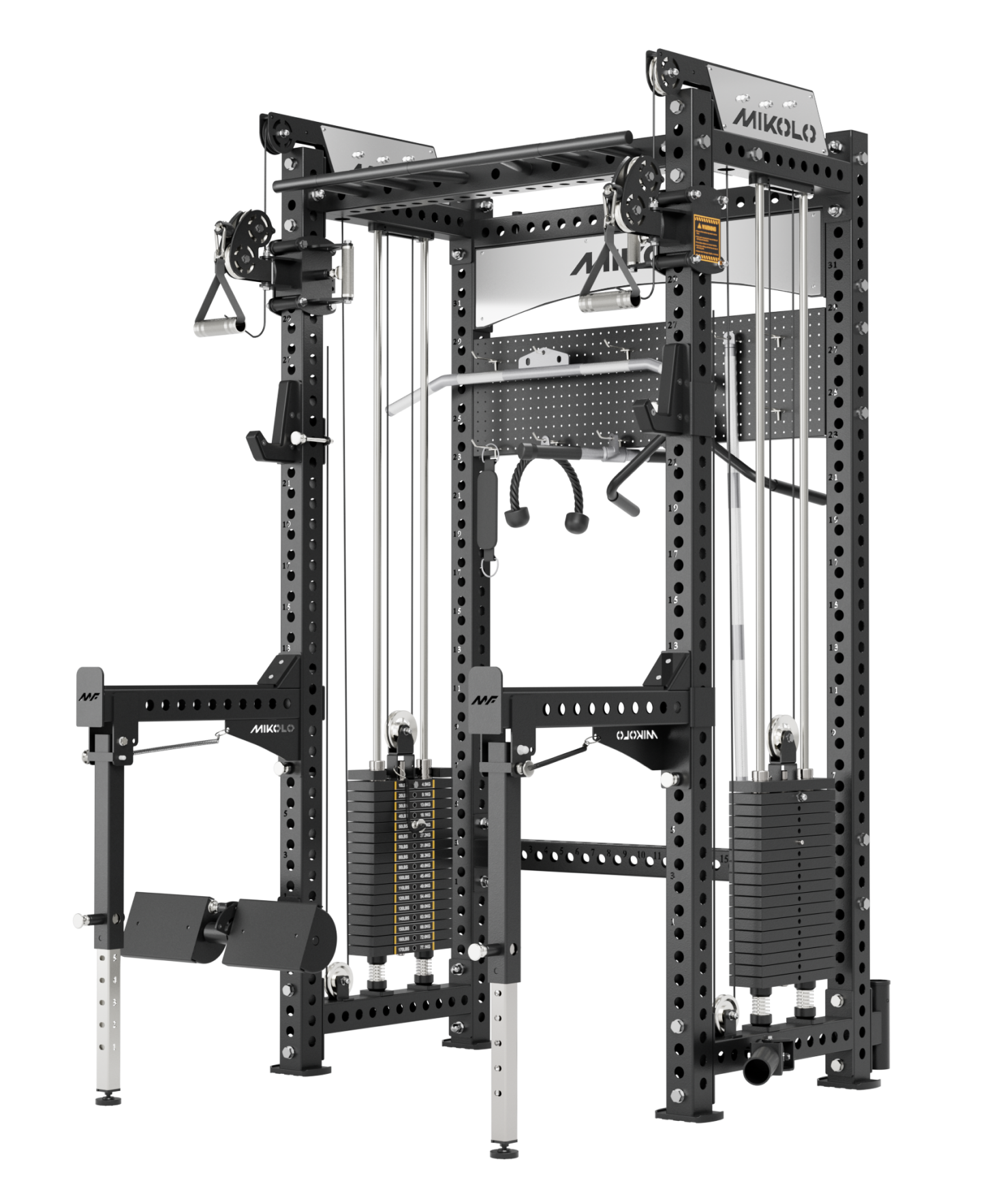
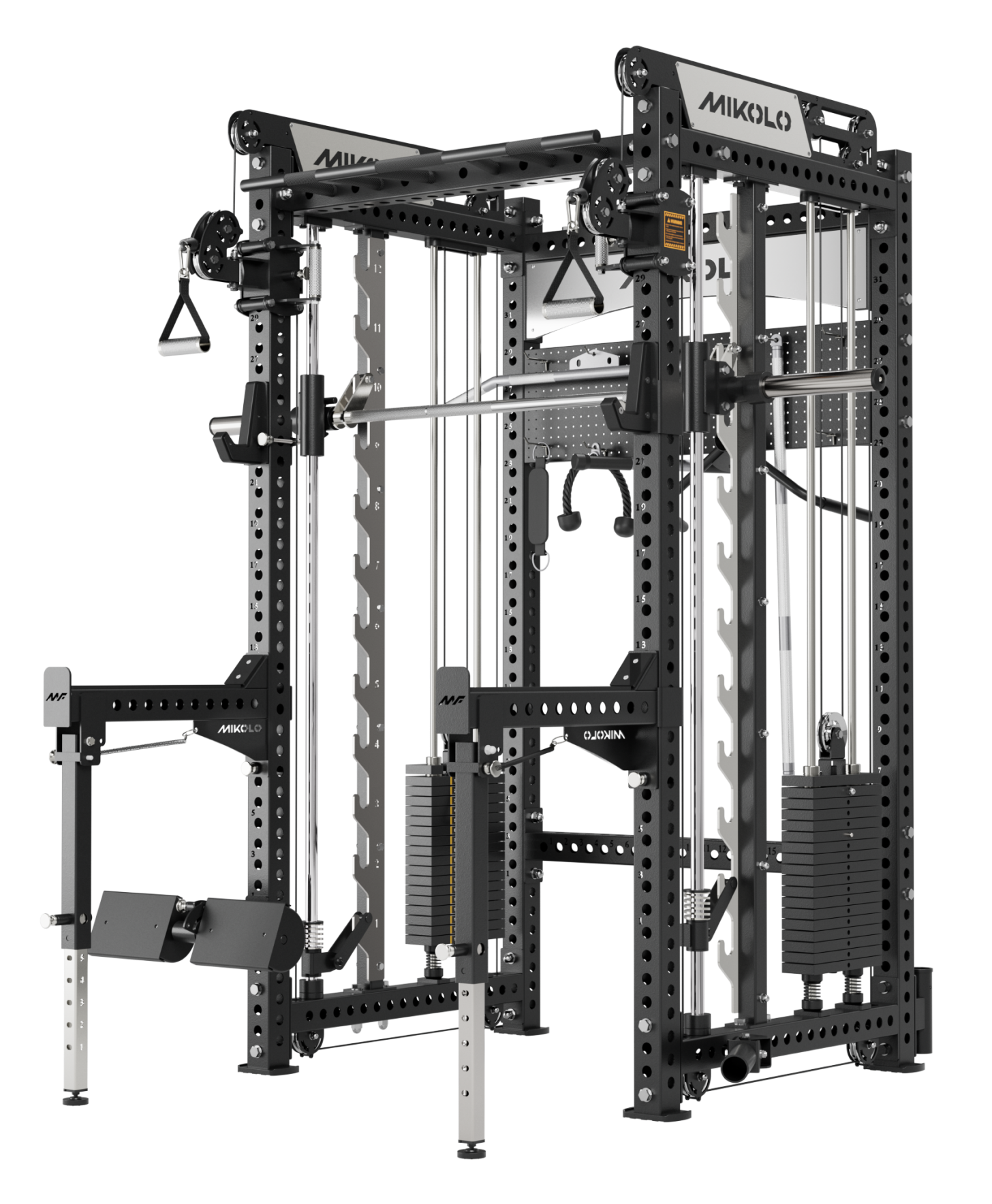
For hybrid athletes training at home, a power rack isn't just a place to hold a barbell. It's the foundation for developing strength, power, stability, and durability through multiple squat variations.
In this guide, we'll break down five power rack squat exercises that can help build stronger legs, improve force production, and support long-term athletic performance.
Why Hybrid Athletes Need More Than Just Running
Many endurance-focused athletes fall into the same trap.
They assume that more miles automatically lead to better performance.
Running certainly improves aerobic capacity, but it doesn't fully address one critical quality: force production.
Every stride requires your body to absorb force and then create force.
The stronger your muscles become, the less effort each stride requires relative to your maximum capacity.
That's one reason strength training has become a staple in modern hybrid programming.
A stronger athlete can often:
- Maintain pace longer
- Handle higher training volumes
- Recover more efficiently
- Produce more power when fatigued
- Reduce the likelihood of overuse injuries
Squat training sits at the center of that process because it develops the muscles that drive nearly every lower-body movement.
For athletes building a home gym, consistency matters more than complexity.
The best equipment is the equipment that allows you to train safely and progressively year after year.
A quality power rack gives you the ability to:
- Train heavy without a spotter
- Adjust safety arms for confidence under load
- Perform multiple squat variations
- Progress strength safely
- Combine strength and conditioning work in one space
Instead of relying on several specialized machines, a single rack can support nearly every major lower-body strength movement you'll need.
That's especially valuable for hybrid athletes who want maximum training versatility without filling an entire garage with equipment.
1. Barbell Back Squat
Why It Belongs in Every Hybrid Program
If you could only choose one lower-body strength exercise, the back squat would be hard to beat.
It trains the quads, glutes, hamstrings, core, and upper back while teaching the body to produce force through the ground.
For hybrid athletes, that translates directly into stronger movement patterns during running, loaded carries, sled work, and high-output conditioning sessions.
Inside a power rack, back squats become significantly safer and easier to progress. Adjustable safety arms allow you to train hard even when a training partner isn't available.
Best For
- Building maximum strength
- Increasing force production
- Developing lower-body resilience
Recommended Sets and Reps
Strength Focus:
Strength-Endurance Focus:
2. Front Squat
Why Hybrid Athletes Shouldn't Skip It
The front squat shifts the load to the front of the body, demanding greater core engagement and a more upright torso position.
Many athletes immediately notice how much harder their abs, upper back, and quads have to work.
This variation carries over particularly well to activities that require posture under fatigue.
When your body starts getting tired, maintaining good positioning becomes more difficult. Front squats help reinforce that ability.
Using a power rack makes setup simple. The bar can be positioned at the exact height needed for efficient unracking and reracking between sets.
Best For
- Quad development
- Core strength
- Postural endurance
Recommended Sets and Reps
3. Pause Squat
Building Strength Where Most Athletes Are Weak
A lot of athletes rely on momentum without realizing it.
The pause squat removes that advantage.
By stopping for two to three seconds at the bottom position, you eliminate the stretch reflex and force the muscles to generate force from a dead stop.
The result is improved stability, better control, and stronger positioning throughout the entire lift.
Because the lift becomes more challenging, safety arms inside the rack become even more valuable. Athletes can focus on quality execution without worrying about getting stuck at the bottom.
Best For
- Breaking strength plateaus
- Improving squat control
- Increasing bottom-end strength
Recommended Sets and Reps
4. Box Squat
A Smart Variation for Power Development
Box squats don't always get the attention they deserve.
For hybrid athletes, they're one of the most practical ways to develop explosive strength while reducing unnecessary wear and tear.
The box provides a consistent depth target and encourages athletes to sit back into the movement rather than simply dropping straight down.
This teaches better hip engagement and improves force production out of the bottom position.
Inside a power rack, box squats are easy to set up and highly repeatable, making them useful for both beginners and experienced lifters.
Best For
- Explosive strength
- Hip power
- Consistent squat depth
Recommended Sets and Reps
5. Pin Squat
The Most Underrated Power Rack Squat Variation
If there's one squat variation that truly highlights the value of a power rack, it's the pin squat.
Unlike traditional squats, pin squats start from the safety bars rather than relying on a controlled descent.
This removes stored elastic energy and forces the athlete to generate force immediately from a dead stop.
The movement develops starting strength, acceleration, and lower-body power.
Those qualities are incredibly useful for athletes who regularly perform loaded carries, hill running, sled pushes, or explosive conditioning work.
Without a rack, this exercise isn't practical.
With a rack, it's one of the most effective strength-building tools available.
Best For
- Starting strength
- Explosive power
- Force production
Recommended Sets and Reps
Sample Hybrid Athlete Squat Workout
Looking for a simple way to put these movements together?
Try this lower-body session:
Main Strength Lift
Back Squat
Secondary Strength Movement
Front Squat
Accessory Work
Bulgarian Split Squat
Power Development
Box Squat
Finisher
Walking Lunges
This combination develops strength, stability, muscular endurance, and power without turning your leg day into an all-day event.
Building a Smarter Home Gym for Hybrid Training
Hybrid athletes need equipment that can adapt as their training evolves.
Today you might be focused on strength.
Six months from now you may be prioritizing endurance, conditioning, or race-specific preparation.
That's why a power rack remains one of the smartest long-term investments for a home gym.
A single rack can support:
- Back Squats
- Front Squats
- Pin Squats
- Bench Press
- Pull-Ups
- Overhead Press
- Lunges
- Deadlift Variations
Instead of outgrowing your equipment, you continue finding new ways to use it.
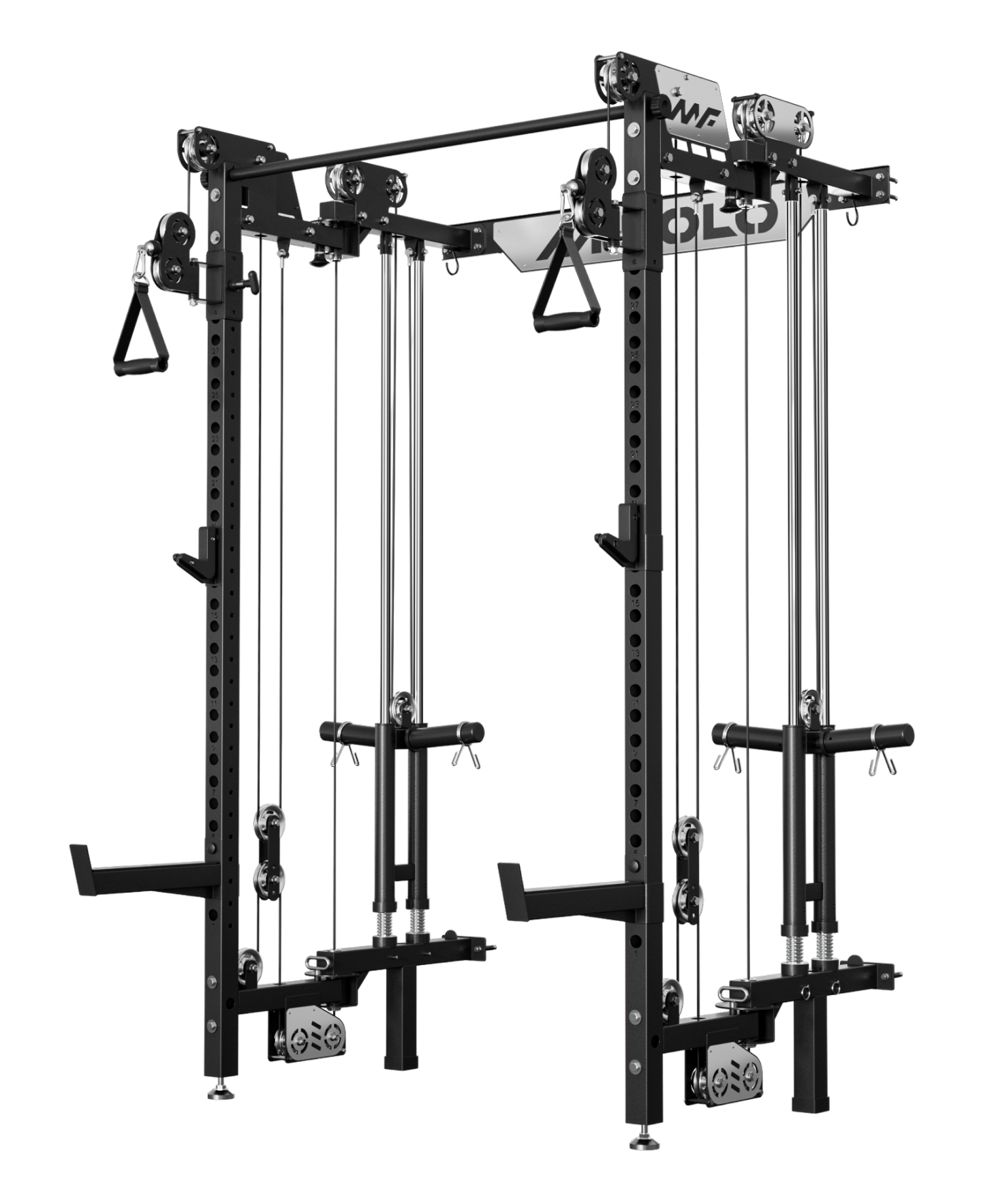
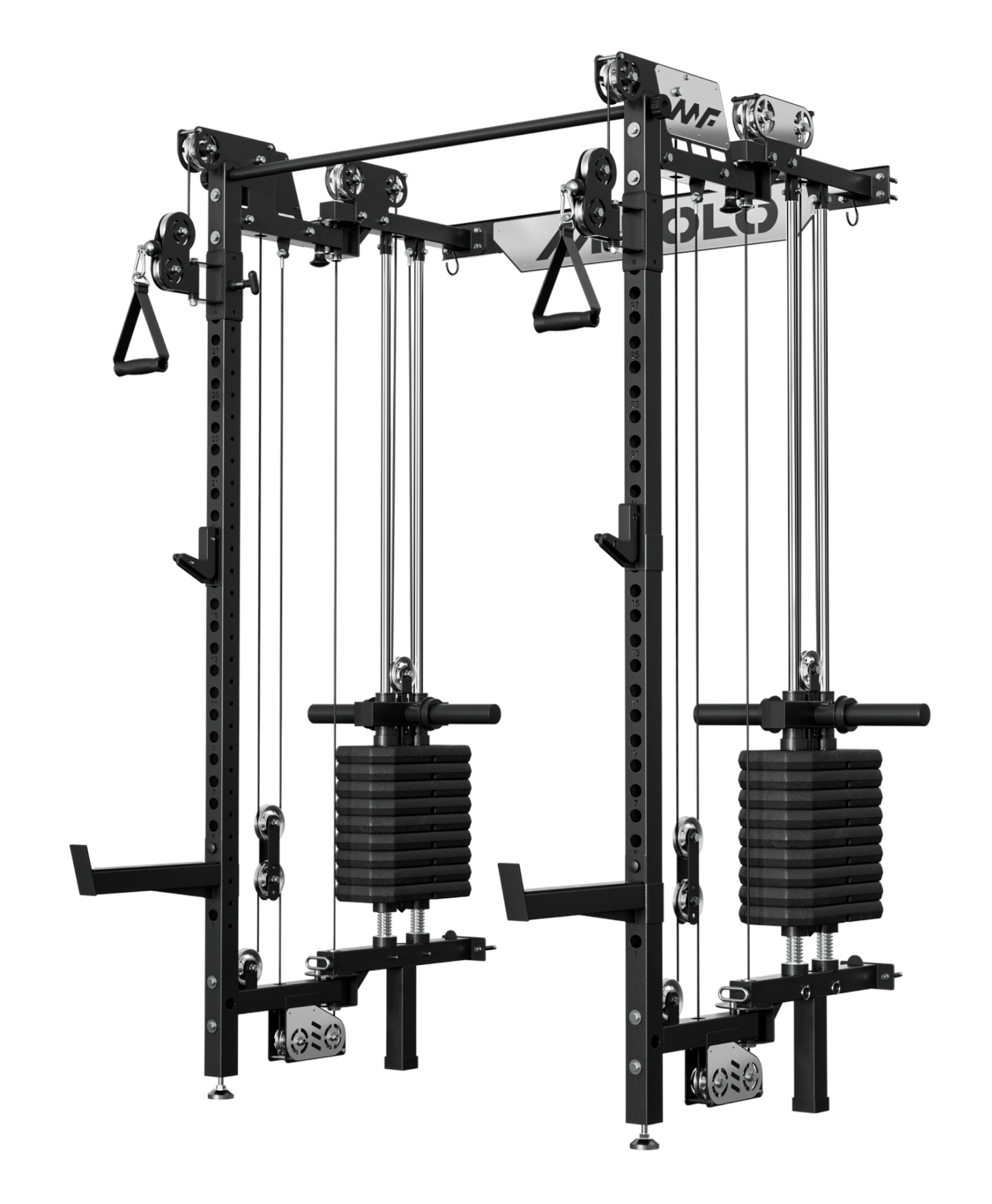
For athletes looking to build a complete training space, a well-designed power rack creates the foundation for years of productive training.
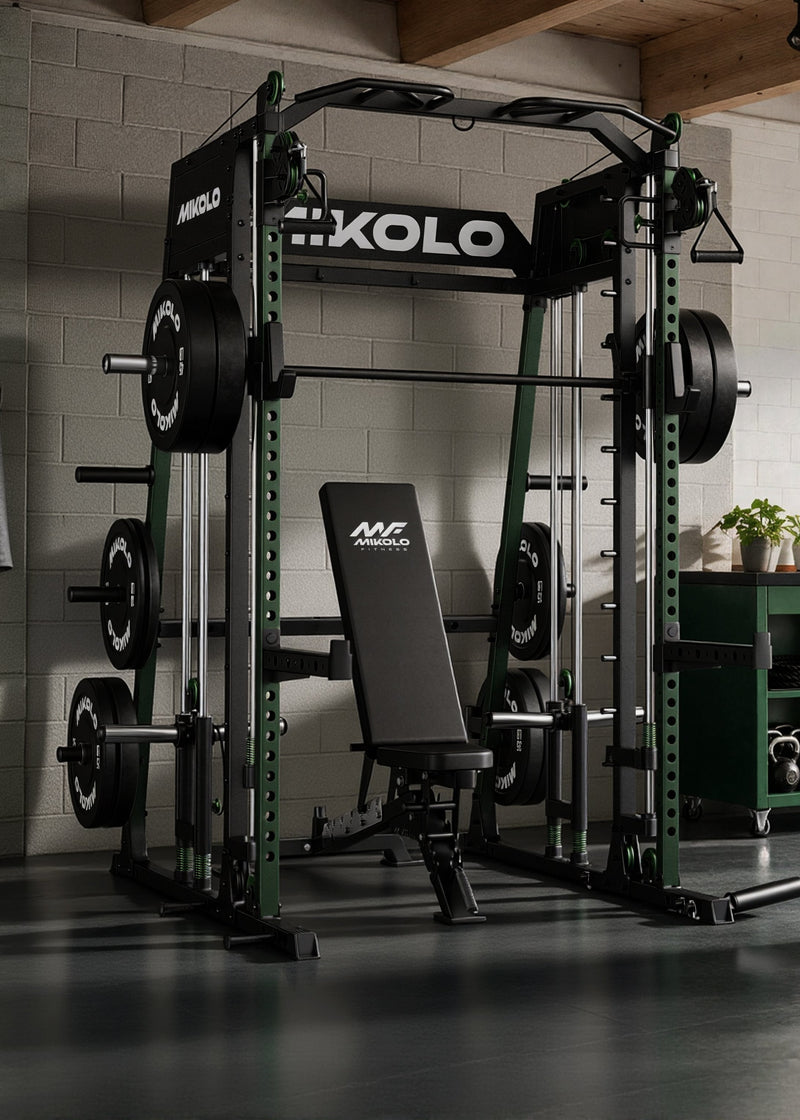
At Mikolo, our power rack systems are designed to support exactly that type of progression—giving athletes the versatility to train for strength, endurance, and everything in between without compromising on safety or performance.
Final Thoughts
The best hybrid athletes aren't simply good runners or strong lifters.
They're capable of producing force repeatedly, even when fatigue starts to set in.
That's what makes squat training so valuable.
Whether you're building maximum strength through back squats, improving posture with front squats, developing power through box squats, or attacking weaknesses with pin squats, every variation serves a purpose.
And when all of those movements can be performed safely inside a power rack, you create a training environment that supports long-term progress rather than short-term results.
Master these five squat variations, stay consistent, and you'll build the kind of lower-body strength that carries over to every aspect of hybrid performance.






















Leave a comment
This site is protected by hCaptcha and the hCaptcha Privacy Policy and Terms of Service apply.