Ultimate Guide to Finding the Best Home Weight Machine (2026)

Ultimate Guide to Finding the Best Home Weight Machine (2026)

HOME GYM BUYER'S GUIDE
How to Choose the Best Home Weight Machine for Your Goals

The best home weight machine isn't necessarily the one with the most exercises or the biggest weight stack. It should fit your training goals, available space, and how you expect your strength to develop over the next few years.

For some lifters, that means a simple selectorized machine with quick weight changes. For others, a functional trainer offers the cable freedom they need, while a Smith machine, power rack, or all-in-one system makes more sense for strength-focused training.

This guide breaks down the main types of home weight machines, what to look for before buying, and how to compare them based on the way you actually train.

Which Type of Home Weight Machine Fits Your Training?

Home weight machines use different resistance systems, and each one comes with its own advantages and trade-offs. Before comparing brands or individual models, start by deciding how you want to train.

Selectorized Machines for Simple, Guided Workouts

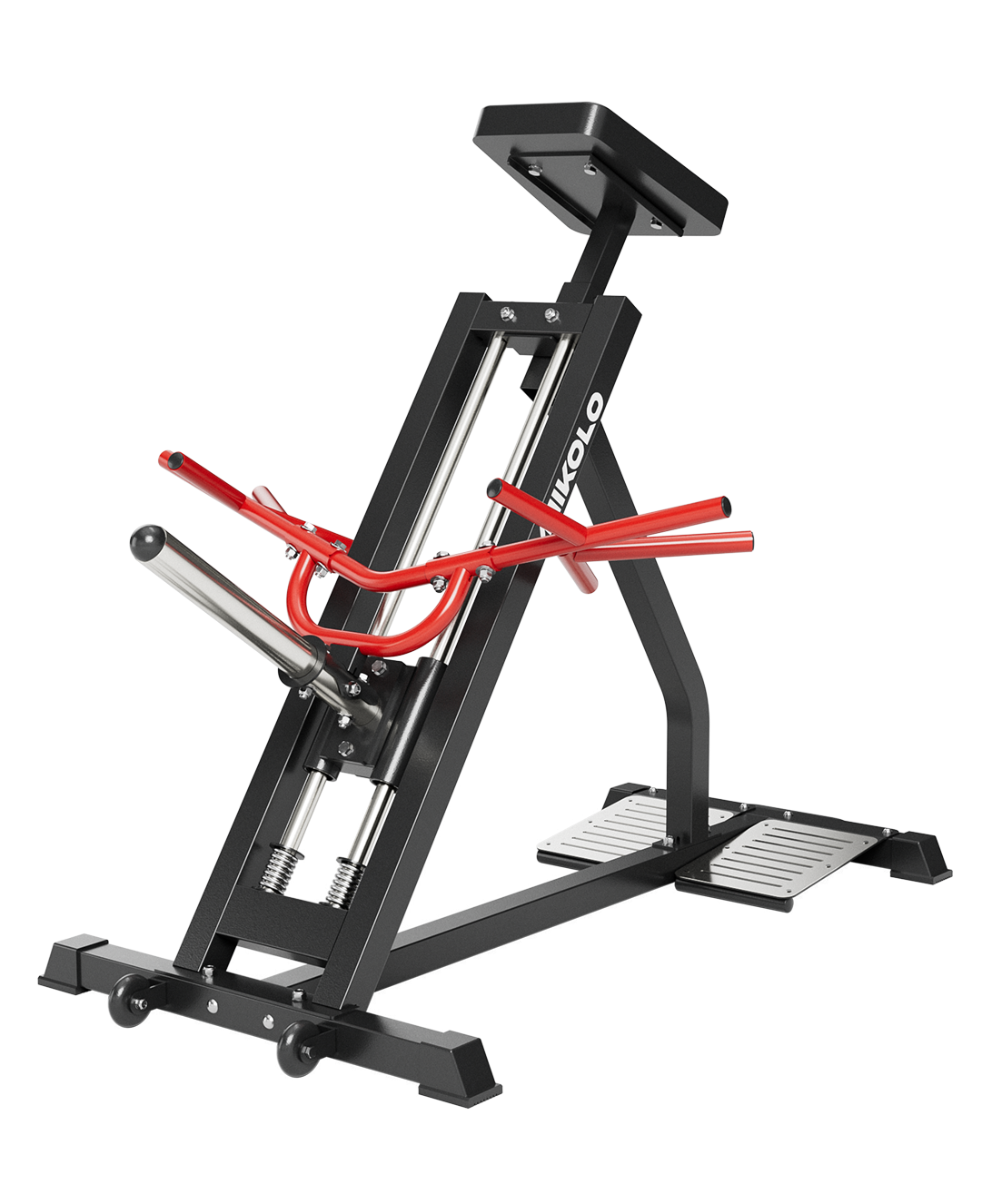
A selectorized machine uses a weight stack and a pin to adjust resistance. You don't need to load individual plates between sets, which makes these machines convenient for straightforward strength workouts.

They can be a practical choice if you mainly want guided pressing, rowing, pulldown, and similar movements without setting up a larger rack system.

The trade-off is progression. A fixed weight stack has a defined resistance range, so you'll want to check the maximum load before buying, especially if you're already an experienced lifter.

Functional Trainers for Flexible Cable Training

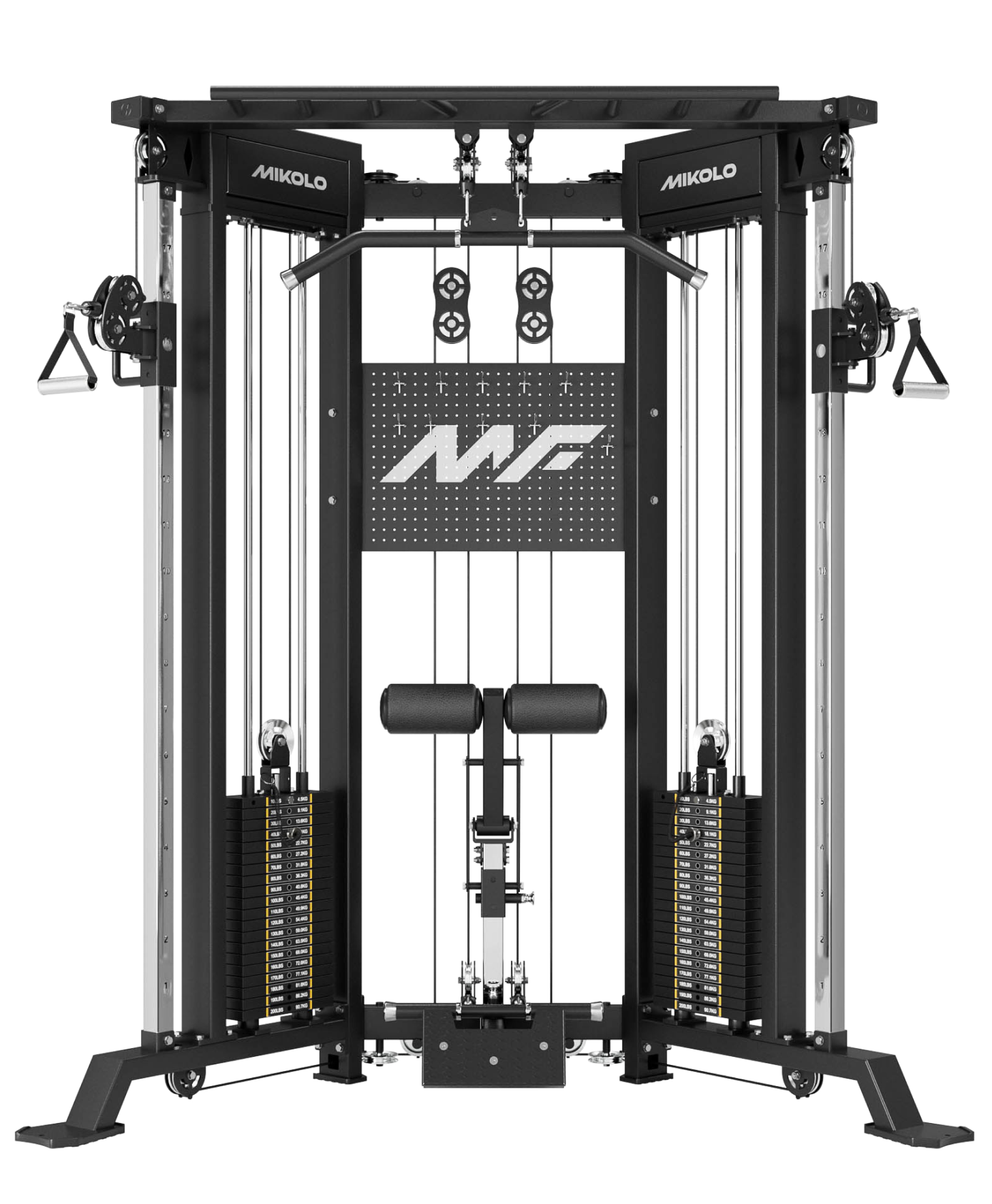
A functional trainer uses adjustable cable pulleys to give you more freedom of movement than a fixed-path machine. Depending on the setup, you can perform cable presses, rows, flyes, pulldowns, curls, triceps work, rotational movements, and unilateral exercises.

The independent cable paths are particularly useful if cable training is a major part of your program.

The trade-off is that functional trainers generally require more setup knowledge. You may also need to adjust pulley height and attachments frequently to get the movement you want.

Smith Machines and Power Racks for Strength Training

A Smith machine guides the bar along a fixed path, which can make it useful for squats, presses, and other barbell movements when you want a more controlled setup.

A power rack works differently. The bar remains free-moving, while safety pins or spotter arms provide support if you cannot complete a rep.

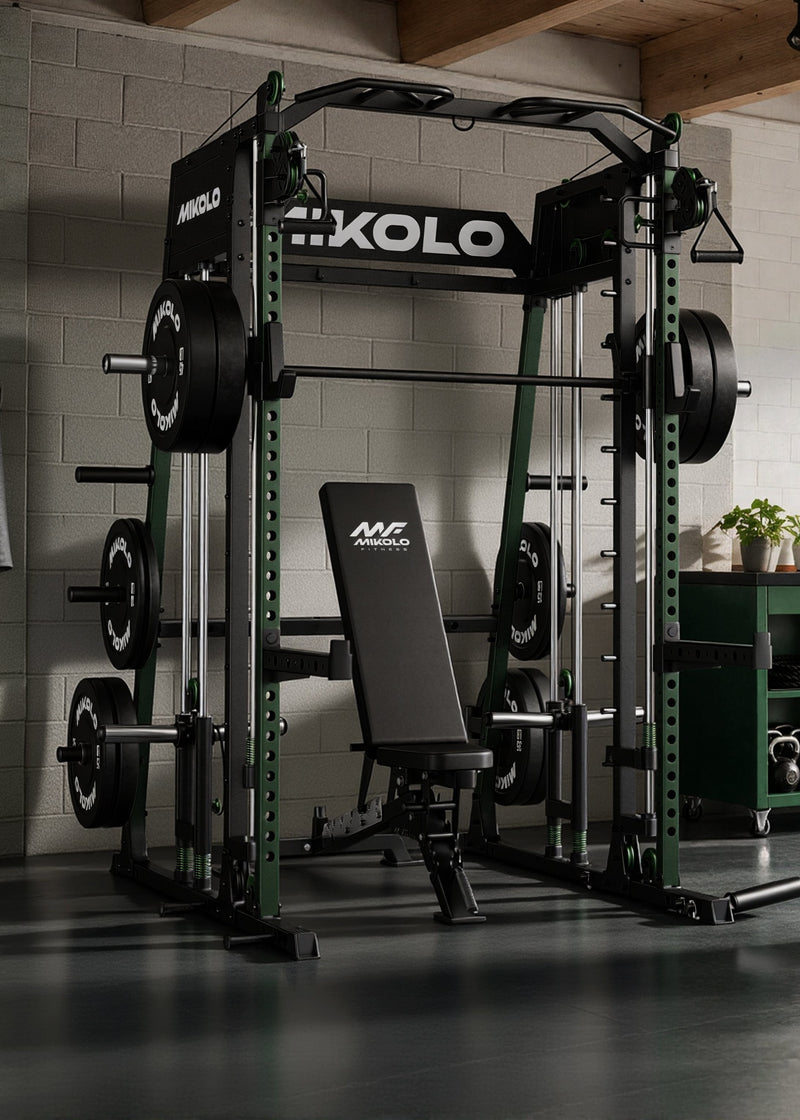
For lifters who want both options, an all-in-one system can combine a rack, Smith machine, and cable trainer in one footprint. MIKOLO's M4-2.0, for example, combines these functions for users who want to build around both barbell and cable training.

Compact and Wall-Mounted Options for Smaller Spaces

Not every home gym needs a full rack.

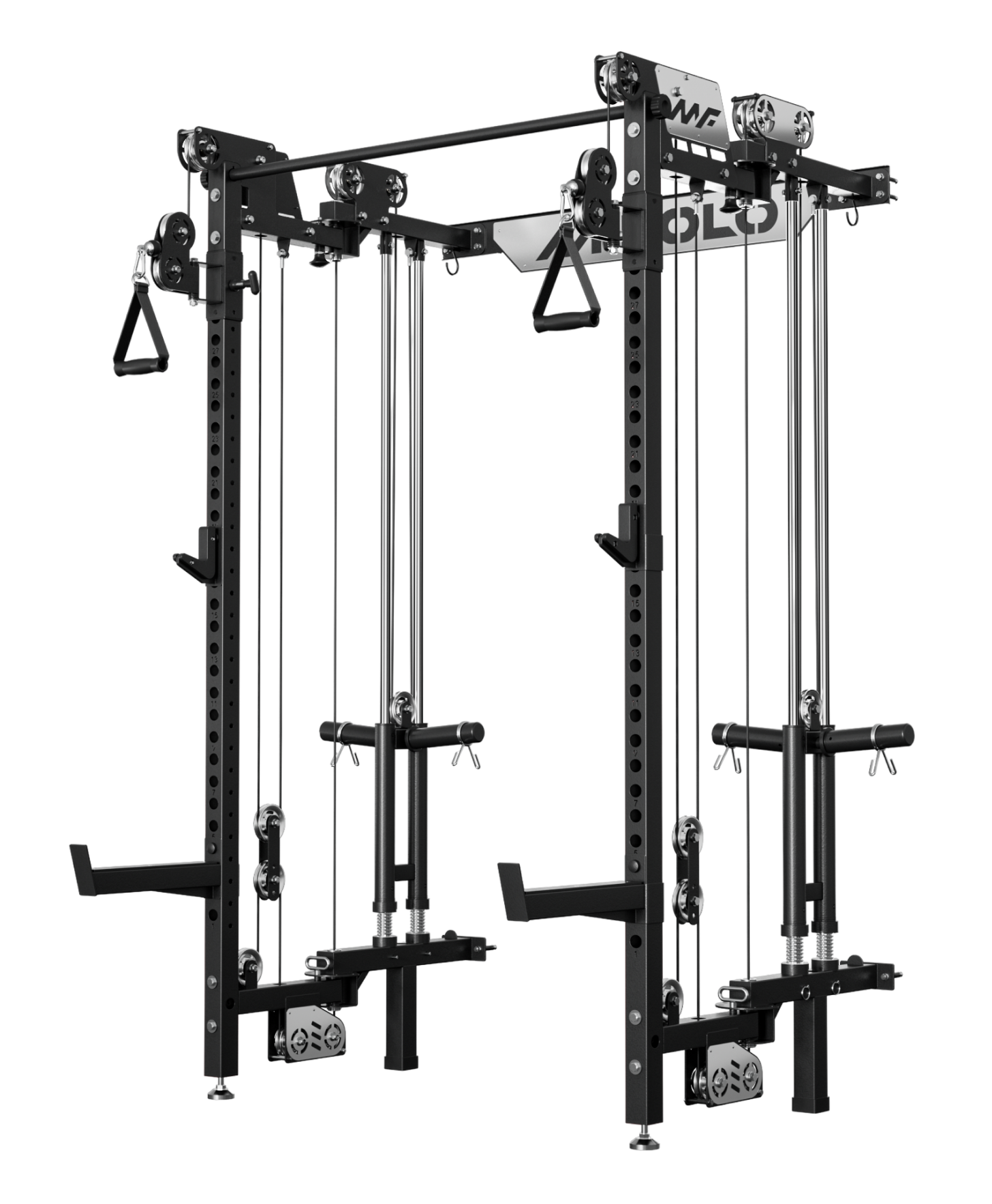
Wall-mounted pulley systems and folding equipment can make more sense when floor space is limited. They can provide cable-based training while keeping more of the room available for benches, dumbbells, conditioning work, or everyday use.

MIKOLO's FoldGym™ is designed around this type of space-conscious setup, folding against the wall when you're not training.

Which Home Weight Machine Should You Choose?

A simple way to narrow down your options is to start with your training priorities rather than the machine itself.

If your priority is... Consider... Why
Simple, guided strength workouts Selectorized machine Quick weight changes and straightforward movements
A wide range of cable exercises Functional trainer Adjustable cable positions and independent movement
Squats, presses, and guided barbell work Smith machine Fixed bar path with an integrated training station
Free-weight strength progression Power rack Supports barbell training while keeping the bar free-moving
Multiple training styles in one setup All-in-one system Combines several stations in one home-gym footprint
Limited floor space Wall-mounted or folding system Keeps more usable floor area available

There isn't one machine that is right for every home gym. The better question is whether the machine supports the exercises you actually plan to perform and leaves enough room for your training to evolve.

What Should You Check Before Buying?

Once you've narrowed down the machine category, look beyond the exercise count and marketing claims. Four factors matter most: usable space, resistance range, construction, and exercise coverage.

Will the Machine Fit Your Space During Actual Use?

Don't measure only the machine's resting footprint.

Think about what happens when you train.

A lat pulldown needs room for the bench and your body. A rack needs clearance for the bar, plates, and the movements you plan to perform. Cable exercises can require additional room for your arms and body to move freely.

Also measure:

  • Ceiling height
  • Doorway width
  • Available wall space
  • Side clearance for loading plates
  • Space behind or in front of the machine
  • Room needed for a bench or other attachments

The manufacturer's footprint is the starting point, not the entire space requirement.

How Much Resistance Do You Need?

Think about both your current strength and where you expect to be in a few years.

Selectorized machines have a defined weight-stack limit. That's convenient, but you'll eventually reach that ceiling if you become significantly stronger.

Plate-loaded machines offer more flexibility because you can add plates within the machine's rated capacity. Cable systems can also differ substantially depending on their pulley ratio and construction.

Don't automatically choose the machine with the largest advertised number. Make sure you understand whether that number refers to the weight stack, resistance at the handle, or the amount of weight loaded onto the machine.

Are the Frame, Pulleys, and Safety Features Built for Your Routine?

Construction matters more when a machine is going to be used several times a week for years.

Look at:

  • Frame construction
  • Cable routing
  • Pulley design
  • Guide rods
  • Adjustment points
  • Safety pins or spotter arms
  • Rated weight capacity
  • Attachment compatibility

Smooth cable travel and solid adjustment points can make a noticeable difference in everyday use. For rack-based equipment, also check how the safety system works and whether the machine is designed around the lifts you perform most often.

Can You Perform the Movements That Matter to You?

Don't buy a machine because it advertises dozens of exercises.

Make a list of the five or six movements you perform most often, then check whether the machine supports them comfortably.

For example, a cable trainer may list dozens of exercises, but that doesn't automatically mean every movement will feel natural in your available space. Check pulley height, cable travel, bench position, attachment options, and your own range of motion.

Home Weight Machine Comparison

The main categories can be compared by looking at how they deliver resistance, how much space they need, and what type of training they support.

Machine Type Resistance Space Best For Main Trade-Off
Selectorized machine Fixed weight stack Moderate Guided strength training Defined resistance limit
Functional trainer Adjustable cables Small to moderate Versatile cable training Requires more setup
Smith machine Guided barbell Moderate to large Squats, presses, and guided lifts Fixed bar path
Power rack Free-weight barbell Moderate to large Strength progression More setup and equipment needed
All-in-one system Multiple resistance types Moderate to large Full home-gym training Higher upfront investment
Wall-mounted system Cable or plate-loaded Small Space-conscious gyms Less suited to some barbell movements

Single-Stack Machines

Single-stack machines are a good fit for lifters who value simplicity. MIKOLO use guided resistance for movements such as presses, rows, and pulldowns.

They're particularly useful when you want to start training quickly without loading Olympic plates or building a full rack system.

Before buying, pay close attention to the maximum resistance and the movements included.

Functional Trainers

Functional trainers focus on cable-based movement rather than a fixed bar path. They are useful for lifters who want more freedom to train unilaterally or change the angle of resistance.

MIKOLO's cable lineup includes compact wall-mounted options such as the G3 Plate Loaded Pulley Tower and G5 Weight Stack Pulley Tower. These can be useful when a full-size functional trainer would take up more room than you want to give up.

Smith Machine and Rack Combos

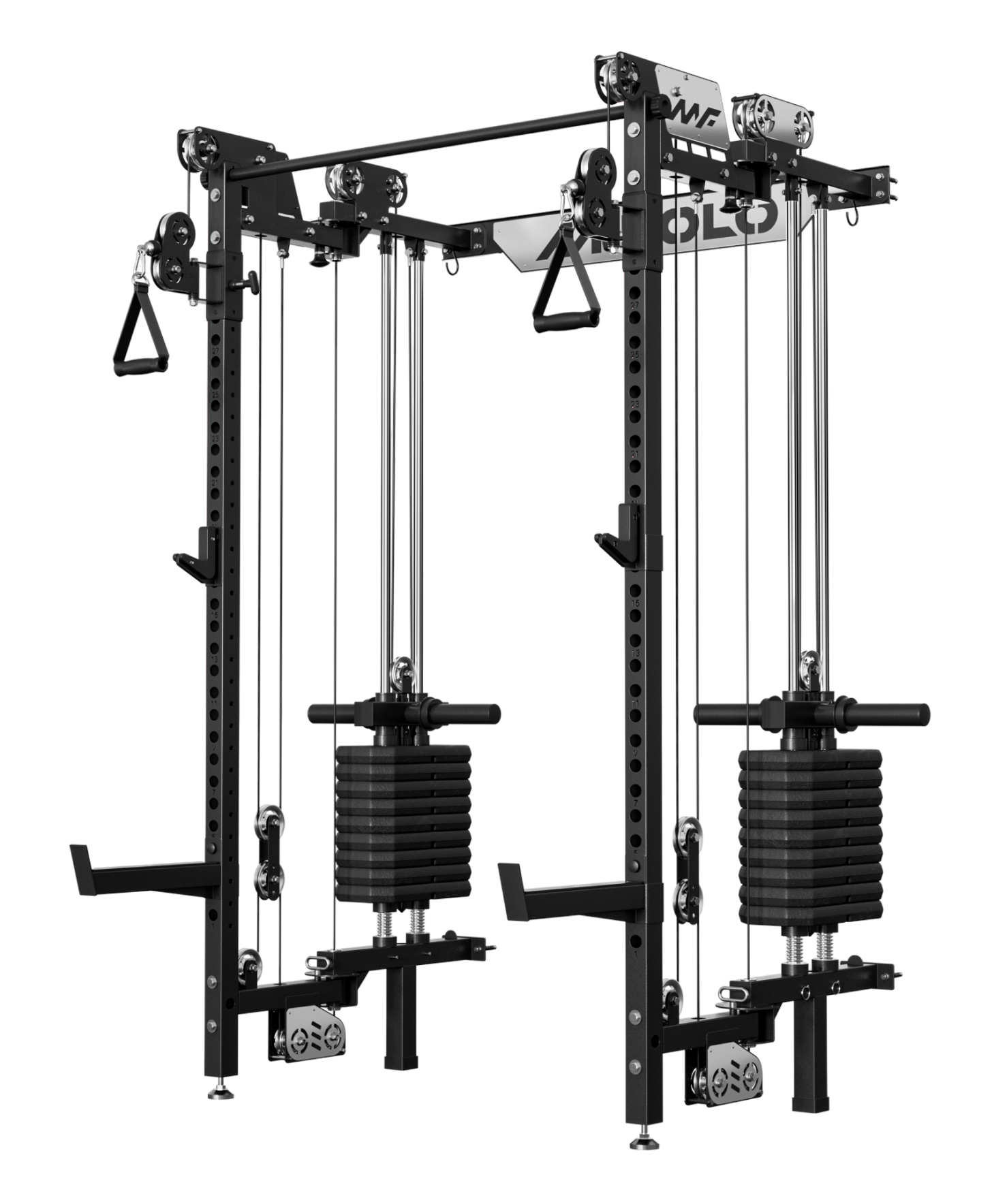
Rack-based systems are a more complete solution for lifters who want to combine barbell and cable training.

MIKOLO's M4-2.0, ANUBIS™-2.0, and K6-2.0 lines combine rack-based training with guided Smith machine and cable functions, although the exact configuration differs by model.

When comparing these systems, don't just count the number of exercises. Look at rack dimensions, cable configuration, pulley ratio, weight capacity, included attachments, and how much room you have to train around the machine.

Smart and Space-Conscious Systems

Digital resistance systems take a different approach by replacing traditional plates or weight stacks with electronically controlled resistance.

Systems such as Speediance are designed around this model, while wall-mounted mechanical systems take a simpler approach to saving space.

The choice here comes down to how you prefer to train. Digital systems may appeal to users who want app-based training and tracking, while mechanical systems can provide a more traditional setup without relying on electronic resistance.

What Will Your Complete Home Gym Cost?

The machine itself is only part of the budget.

Depending on the setup, you may also need a bench, barbell, plates, collars, attachments, flooring, and storage.

Account for the Bench, Plates, Attachments, and Flooring

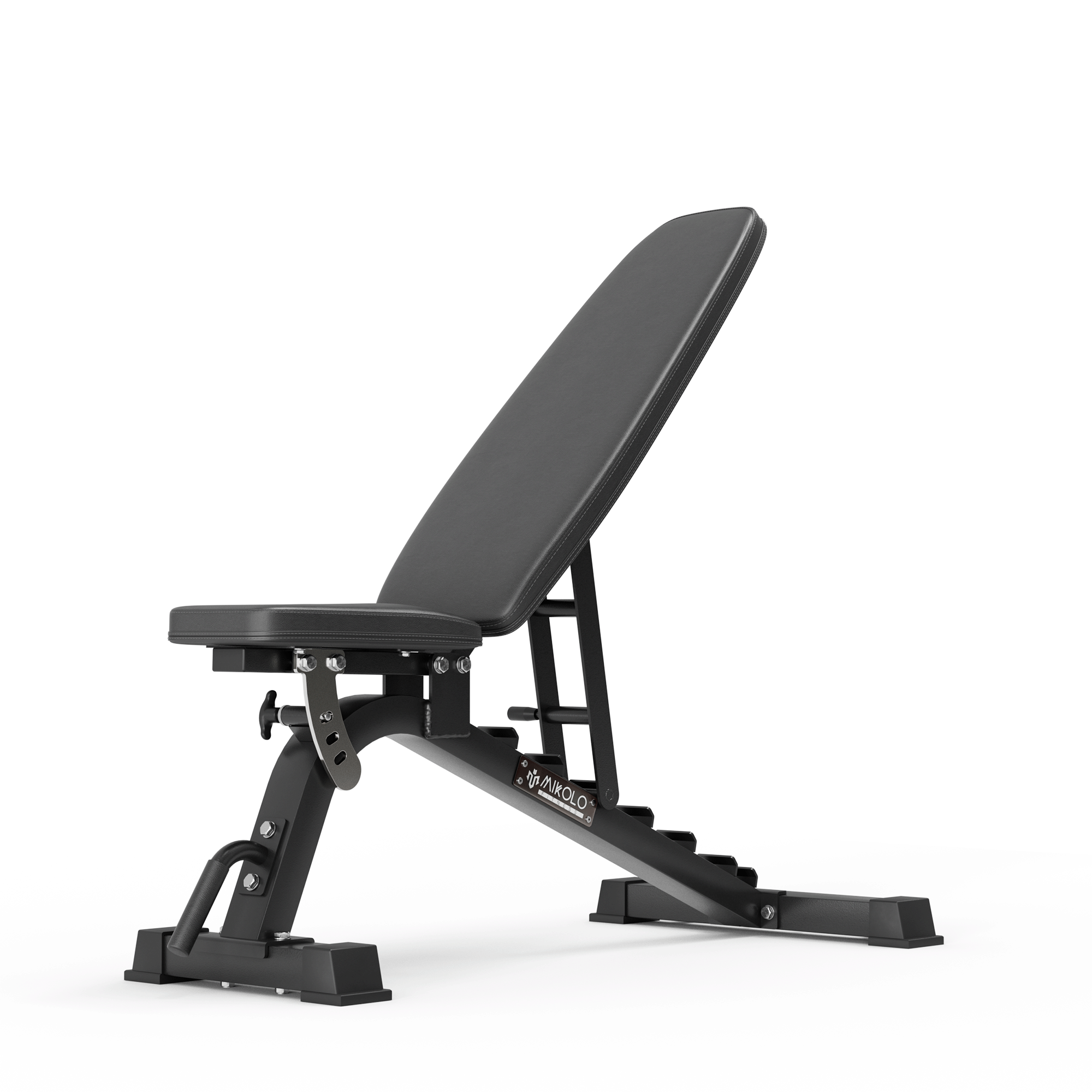
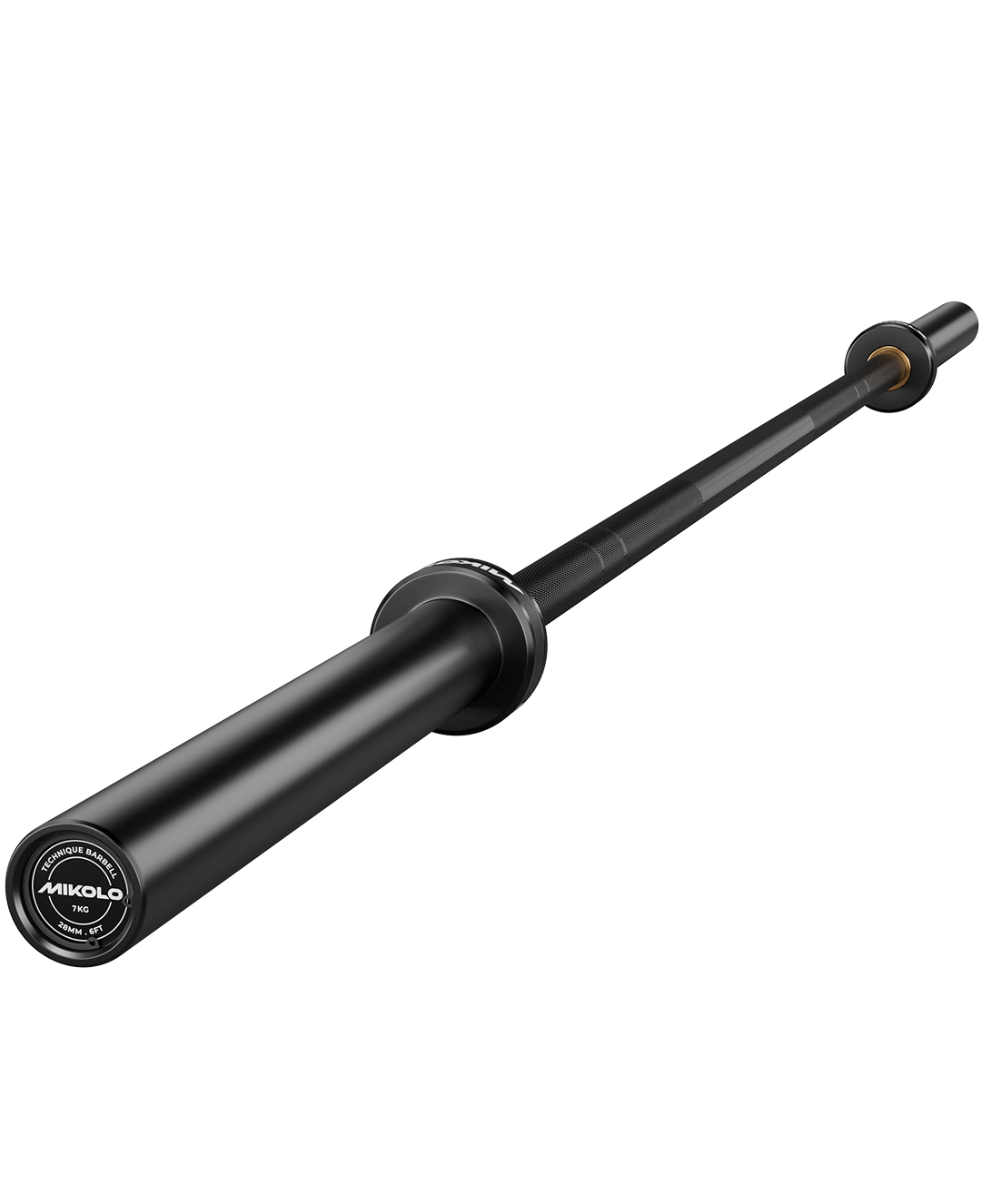
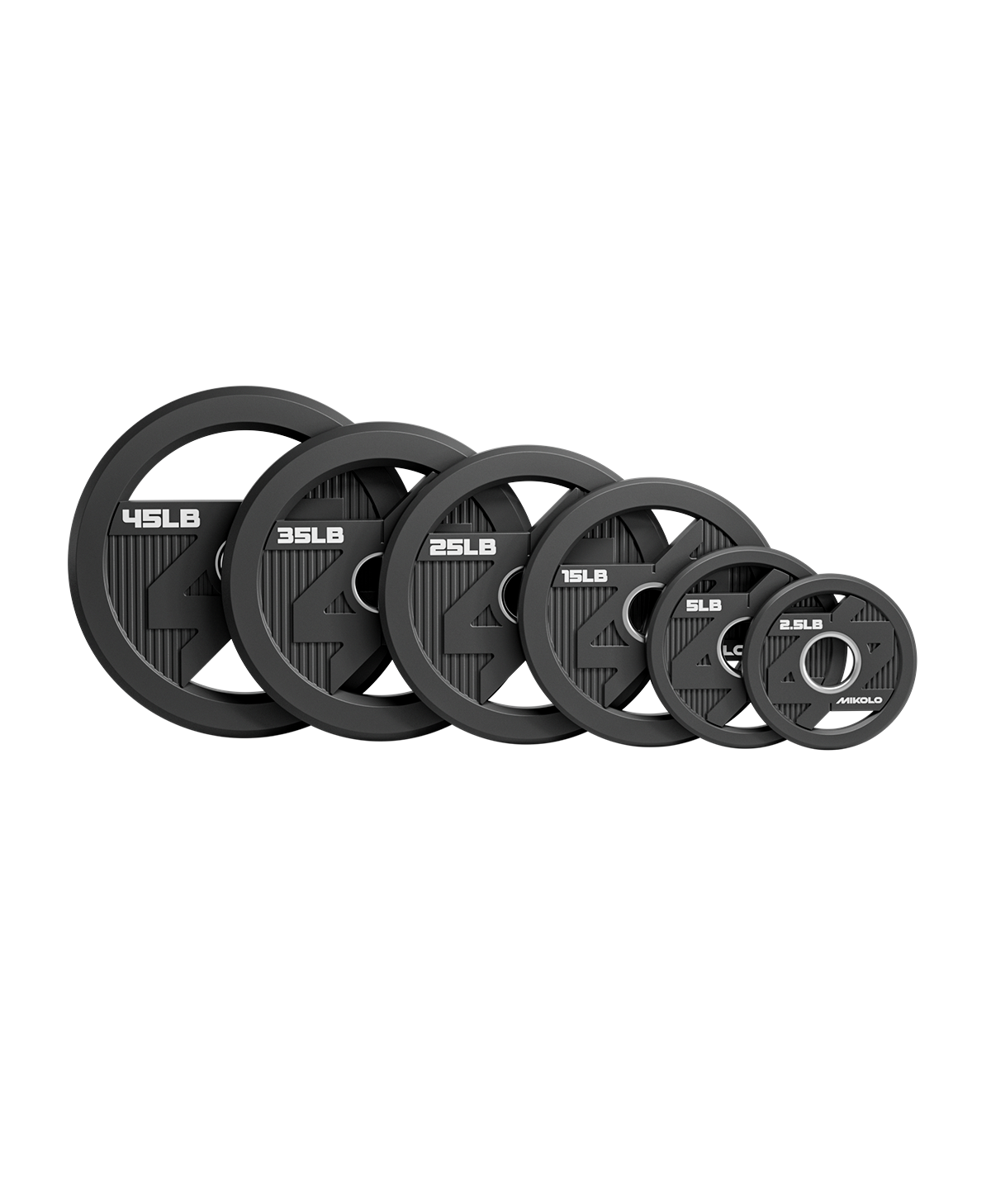
An adjustable FID bench can turn a cable or rack system into a much more useful training station. If you're buying a plate-loaded or rack-based machine, you'll also need to budget for plates and a suitable barbell.

Flooring is another consideration, particularly if you plan to train with free weights.

MIKOLO offers compatible benches, Olympic bars, plates, rack attachments, and flooring options across its home-gym lineup. Buying compatible components together can make setup easier, but you don't necessarily need to purchase everything at once.

Choose Between a Package and a Build-Your-Own Setup

A package can simplify the buying process by combining the main machine with equipment such as a bench, barbell, and plates.

MIKOLO's home-gym packages, including the K6-2.0 Ultra Home Gym Package, M4-2.0 Elite Essential Package, and FoldGym™ Wall-Mounted Package, are designed around different space and training requirements.

Building your gym piece by piece gives you more control over brands, specifications, and spending. It just requires more planning.

Don't Forget Delivery, Assembly, and Maintenance

Large home-gym equipment may arrive in multiple packages, so check the shipping information and tracking details after placing an order.

Assembly is another part of the decision. Larger rack and Smith systems can take considerably more time to assemble than a compact pulley station.

After installation, inspect cables, pulleys, guide rods, bolts, and moving joints regularly. Follow the manufacturer's maintenance instructions for lubrication and adjustments.

How to Choose a Home Weight Machine That Can Grow With You

Your first home gym machine shouldn't only solve today's problem.

Think about what your training could look like two or three years from now.

If you're moving from beginner workouts toward heavier barbell training, a simple single-stack machine may eventually feel restrictive. If cable exercises are already a major part of your routine, a functional trainer may provide more useful progression.

For lifters who want several training methods without filling the room with separate machines, an all-in-one rack system can provide a more expandable foundation.

"Answer these seven questions first before making a decision:"

  1. What are the exercises I perform most often?
  2. How much usable floor and ceiling space do I have?
  3. How much resistance do I need now?
  4. How strong do I realistically expect to become?
  5. Will I need a bench, barbell, plates, or additional attachments?
  6. Can the machine be upgraded or expanded later?
  7. What will the complete setup cost, including delivery and accessories?

Answer those questions first. Then compare specific models.

MIKOLO's home gym education library and product pages provide additional information on measurements, configurations, assembly, and available packages.

Leave a comment

This site is protected by hCaptcha and the hCaptcha Privacy Policy and Terms of Service apply.

Share this article

Popular Series

A man in black athletic wear pushes a loaded black MIKOLO sled across green gym turf
Hybrid Training
A man sits inside a black Mikolo infrared sauna cabin giving a thumbs up next to a dumbbell rack
Recovery
Black and green MIKOLO power rack with loaded barbell and weight plates, featuring an adjustable workout bench in a home gym
Oasis Series
Power Racks

Article & Guide

What Is a Squat Rack: How to Choose the Right One for Your Home Gym

If you're setting up a home gym, choosing the right squat rack can feel overwhelming. There are squat stands, half racks, power racks, and folding racks—and they all seem similar at first.But the real question is simple: which one actually fits your training?In this guide, we’ll break down each type of squat rack and help you choose the right setup based on your space, budget, and training goals. What Is a Squat Rack (and Why It Matters) A squat rack is designed to hold a barbell at adjustable heights so you can safely perform exercises like squats, bench press, and overhead press. But for most home gym users, it becomes much more than that. A good squat rack: Lets you train heavy without a spotter Keeps you safe when you fail a rep Supports full-body strength training That’s why it’s often the first major piece of equipment people invest in. Main Types of Squat Racks 1 Squat Stands Compact & Entry-Level Squat stands are the simplest option, using two separate uprights instead of a full frame. Best for: Beginners, very small spaces, light to moderate lifting Downside: limited stability and safety 👉 Most users eventually upgrade once they start lifting heavier. 2 Half Racks Balanced Option Half racks provide a stronger frame and include spotter arms for added safety. Best for: Intermediate lifters, home gyms with moderate space, users who want stability without a full cage They're a solid middle ground—but still not the safest option for heavy solo lifting. 3 Power Racks Best for Safety & Long-Term Use Power racks (full cages) are the most complete solution. They surround you with four posts and include adjustable safety bars on all sides. Why they stand out: Maximum safety for solo training, high weight capacity, expandable with attachments 👉 If you're building a serious home gym, this is usually the best investment.For example, a system like a power rack with cable system gives you: built-in safety bars, pull-up station, and cable training options. This turns one rack into a full-body training station instead of just a squat setup. 4 Folding Squat Racks Best for Limited Space Folding racks mount to the wall and fold away when not in use. Best for: Garage gyms, shared spaces, minimalist setups Trade-offs: Lower weight capacity, requires wall installation Squat Rack vs Power Rack: What's the Difference? Many people use these terms interchangeably—but they're not the same. Feature Squat Rack Power Rack Structure Open Enclosed Safety Limited Full protection Stability Moderate High Best for Light training Heavy lifting 👉 If you train alone, a power rack is almost always the safer choice. How to Choose the Right Squat Rack Instead of overcomplicating things, match your rack to your situation: ✔ Small spaceGo compact — a folding rack or stand works if space is tight. ✔ Balanced setupHalf rack — good mix of size and stability. ✔ Serious trainingPower rack — go with a full setup like an all-in-one Smith machine & power rack combo. This type of system combines: Smith machine + Cable system + Power rack — so you can train safely while also expanding your exercise options. What Can You Do With a Squat Rack? A squat rack supports full-body training: 🦵 Lower Body Squats · Lunges 💪 Upper Body Bench press · Overhead press 🏋️ Back Pull-ups · Rows With the right setup, you can build an entire training program around it. If you’re using a system with cables (like many functional trainer power rack setups), you can also add: lat pulldowns, cable rows, and isolation movements. Final Thoughts: Which Squat Rack Is Worth It? If you're just starting, a basic setup can work. But if you want something that: grows with your training keeps you safe replaces multiple machines 👉 then a power rack or all-in-one system is the smarter long-term choice. Instead of upgrading later, you start with a setup that can handle everything from day one.
Learn more

What Do Preacher Curls Work: Complete Guide to Target Muscles and Benefits

Preacher curls are a go-to move for building bigger, stronger arms. Whether you’re using a preacher curl bench, dumbbells, or a cable machine setup, this exercise is designed to isolate your biceps and eliminate momentum. If you’ve ever caught yourself wondering which muscles this exercise really targets, you’re not alone. Preacher curls mainly hit your biceps brachii—especially the long head—while also getting help from muscles like the brachialis and brachioradialis. The way the preacher bench is set up, you can’t cheat by swinging the weight, so your arms have to do all the heavy lifting. Knowing exactly how preacher curls work your arms can really help you dial in your training. Here’s a closer look at which muscles get involved and why preacher curls might just be worth adding to your routine. Muscular Focus of Preacher Curls Primary Muscles Activated The biceps brachii is the star here. It’s got two parts—the long head and the short head. The preacher curl really stretches out the long head, which runs along the outside of your upper arm. Your biceps brachii bends your elbow against the weight. Thanks to the bench’s angle, your arms stay in front of your body, giving the long head more of a stretch than regular curls. Since you can’t use momentum or body swing, your biceps are left to do the work—no shortcuts here. Secondary Muscle Engagement The brachialis muscle, tucked under your biceps, helps with elbow flexion. It gets a good workout during preacher curls. Your brachioradialis, running from elbow to wrist, also helps flex your elbow. When you use an underhand grip, the supinator muscles in your forearm also get involved to help rotate and support the lift. Stabilizing Muscle Groups Your forearm flexors help you maintain a solid grip on the weight, while your anterior deltoid helps stabilize your upper arm against the bench. Your core also helps keep your torso steady, even though it’s not the main focus here. Benefits of Preacher Curls Enhanced Muscle Isolation The preacher bench prevents you from using momentum, so your biceps stay loaded from start to finish without relying on momentum. Strength and Hypertrophy Potential Because the movement is so controlled, it’s easier to gradually increase the weight over time. Impact on Arm Aesthetics Preacher curls emphasize the lower portion of the biceps and the brachialis, contributing to fuller, more defined arms. What Equipment Is Best for Preacher Curls? While preacher curls are traditionally performed on a preacher bench, you can still do them a few different ways depending on what equipment you have: Dumbbells: Great for correcting muscle imbalances and improving control Barbell or EZ Bar: Ideal for heavier loading and strength progression Cable Machines: Provide constant tension throughout the movement Smith Machine Setups: Offer added stability and safety, especially for beginners or solo training For home gym users, an all-in-one setup that combines a Smith machine with a cable system makes this much easier to do at home. You get more control, smoother resistance, and the ability to switch between exercises without changing machines. Example: Mikolo All-in-One Smith Machine Preacher Curls vs Regular Curls Unlike regular bicep curls, preacher curls eliminate momentum and reduce shoulder involvement, making them more effective for strict isolation. Regular curls allow heavier weights and more natural movement, while preacher curls focus on control and muscle tension. FAQ Are preacher curls better than regular curls? They’re better for isolation, while regular curls are better for overall strength and functional movement. Can preacher curls build bigger biceps? Yes. They’re highly effective for hypertrophy when combined with progressive overload. Should beginners do preacher curls? Yes, especially since the setup helps enforce proper form and reduces cheating. Can you do preacher curls at home? Absolutely. With the right equipment setup—like a bench, dumbbells, or a cable/Smith machine—you can perform effective preacher-style curls at home. Final Tip: If you’re training at home, choosing versatile equipment can make exercises like preacher curls easier, safer, and more effective to perform consistently.

Learn more

Smith Machine Guide: Benefits, Exercises & Best Options for Home Gym

The Smith machine is a staple in many gyms—a barbell fixed on steel rails, moving only up and down in a straight path. Unlike free weights, it guides your motion and comes with built-in safety hooks so you can catch the bar whenever you need. That’s a big reason it attracts both beginners and seasoned lifters. The Smith machine gives you more control and safety than free weights, especially if you’re working out solo. You can lock the bar in place with a quick twist of your wrists, so there’s no need for a spotter if you can’t finish a rep. The set path also lets you hone in on specific muscles without stressing about balance the whole time. For home gym users, modern all-in-one Smith machine systems combine multiple stations—like cables, pull-up bars, and storage—into one compact setup, making them a practical choice for building a complete training space. Once you get the hang of the Smith machine, it can really boost your workouts. You’ll see how different machines work, which exercises hit your legs, chest, glutes, and back, and how to dodge the usual mistakes that slow your progress. Understanding the Smith Machine The Smith machine stands out because of its fixed barbell path and safety features. The guided rails control the bar’s movement, and you can lock it in place at any time with simple hooks along the track. Core Components and Design At its core, the Smith machine is a barbell attached to vertical steel rails—these rails typically run from the floor to about seven or eight feet high. The bar slides smoothly up and down on these tracks. The barbell usually weighs between 15 and 25 pounds, which is less than a standard Olympic barbell (that’s 45 pounds). It’s worth knowing your machine’s bar weight so you can actually track your lifts. Safety hooks are spaced every few inches along the rails. Twist the bar, and you can hook it at any height—perfect if you’re tired or lose control mid-set. Most machines also have adjustable stops to keep the bar from dropping too low. Guided Barbell Mechanics The bar only moves vertically (sometimes with a slight forward angle). You can’t move it forward, back, or side-to-side. This locked-in path means you don’t have to balance the weight as you would with free weights. Every rep follows the same route, start to finish. To lock or unlock the bar, just twist your wrists a bit and it’ll catch or release from the safety hooks. Because the machine does the stabilizing, your smaller support muscles aren’t as involved as they’d be with free weights. The Smith machine handles the bar’s position for you. Comparison With Traditional Free Weights With free weights, you’re balancing and controlling the barbell in every direction. Your stabilizers are working overtime to keep it steady. The Smith machine takes that job away. Free weights let you adjust the bar path to fit your body’s natural movement. The Smith machine locks you into one line. That’s handy for isolating muscles, but it might not match how your joints want to move. If things go south with free weights, you can bail by dropping or rolling the bar away. On the Smith machine, just twist and lock the bar wherever you are—super quick exit. Safe Operation Tips Getting the setup right, actually using the safety features, and keeping good form are the basics for staying safe and getting stronger on the Smith machine. Proper Setup and Positioning Always adjust the bar height before you add weight. For squats, set the bar at shoulder height. For bench presses, you want it so your arms are slightly bent when you’re lying down. Make sure your body lines up naturally with the bar’s path. If you have to twist or reach awkwardly, adjust until it feels right. Double-check the safety stops—those are your last line of defense. Set them just below your lowest point in the movement. Give the machine a quick once-over. The bar should rotate smoothly and all the pins should be locked in. Engaging Safety Locks The Smith machine’s hooks lock the bar in place. To unlock, lift the bar a bit and twist your wrists—usually just a small turn forward or back. It’s smart to practice this locking move with no weight first. You want it to be second nature in case you get stuck mid-lift. The twist-and-lock should be automatic. Keep the safety stops at the right height for every exercise. They should catch the bar if you fail, but not block your range of motion. Try them with a light load to make sure they’re set right. Correct Lifting Techniques Brace your core every rep. This protects your back and helps with balance, even though the machine’s guiding the bar. Use a steady tempo—lower the weight for 2-3 seconds, lift it back up in 1-2. Don’t just let it drop with gravity. Keep your feet flat. Don’t let your heels pop up during squats or push through your toes on the bench press. Remember to breathe: inhale as you lower, exhale as you push up. Holding your breath for a whole set? Not a good idea. Common Mistakes to Avoid Don’t get lazy with your stabilizers—the machine helps, but you still need to engage your core and supporting muscles. Resist the urge to pile on weight too fast. The fixed path can make things feel easier, but your joints might not agree. Don’t lean your body into the bar or use momentum to move it. That’s not the point of the exercise. And seriously, never skip setting the safety stops. Even pros can miss a rep, and you want that backup. Varieties of Smith Machines Smith machines come in a few flavors, and the design can really change how the bar feels to lift. The track angle, counterbalance system, and extra features all play a role in which model fits your needs or space. Multi-Functional Hybrid Machines Hybrid Smith machines combine the Smith bar with other workout stations, giving you more options in one big setup. This is exactly where all-in-one systems stand out for home gyms. Typical add-ons: cable crossovers, pull-up bars, plate storage, sometimes even a power rack on the side. Example setups: Mikolo All-in-One Smith Machine | Mikolo Anubis 2.0 (Dual Weight Stack) They’re great for saving space in home gyms—you get lots of exercise variety without buying tons of separate gear. But they’re pricier and take up more room than a basic Smith machine. Standard Linear Smith Machines Standard linear Smith machines move the bar straight up and down—no angle at all. This rigid path doesn’t always match how your body wants to move. They’re solid for calf raises and shrugs, since those moves are already pretty vertical. But for squats or bench presses, that straight line can feel a bit forced. You might have to tweak your stance or bar position, and honestly, it’s not always comfortable compared to free weights. Most gyms go with this type—they’re cheaper and don’t need much maintenance. Angled Track Smith Machines Angled Smith machines tilt the bar path at about a 7 to 12 degree angle. That slant is closer to how your body actually moves during big lifts. The angle makes squats feel more natural—your knees and hips track better, and there’s less strain on your joints. Bench presses benefit too, since the bar moves in a slight arc, more like what you’d get with free weights. Downside? You can’t change the angle. What’s great for squats might not be perfect for other lifts. Counterbalanced and Non-Counterbalanced Models Non-counterbalanced Smith machines start with the full bar weight—usually anywhere from 15 to 45 pounds depending on the brand. Counterbalanced machines use weights or springs to offset the bar, so it can feel as light as 5 to 15 pounds empty. That’s awesome for beginners who want to nail their form before loading up plates. Some key differences: How much weight you start with How smooth the bar feels Price tag How much maintenance the machine needs Counterbalanced systems have more moving parts, so they can wear out and cost more up front. But that lighter starting weight is great for learning the ropes safely. Benefits and Limitations The Smith machine shines for stability and controlled movement, but it does limit your natural motion and how much your stabilizers get involved. Stability and Injury Risk The fixed bar path provides built-in stability that helps lower your risk of dropping weights or losing balance during lifts. Range of Motion Considerations The Smith machine locks your movement into a single line, which may not match natural movement patterns for every lifter. Versatility Across Exercises You can perform a wide range of exercises including squats, presses, rows, and isolation work. Suitability for Different Experience Levels Beginners benefit from safety and control, while advanced lifters use it for hypertrophy and accessory work. Should You Buy a Smith Machine for Your Home Gym? If you’re building a home gym, a Smith machine is one of the most versatile pieces of equipment you can invest in. Best for: Beginners, solo training, safer heavy lifting Great for: Space-saving all-in-one setups Less ideal for: Pure free-weight purists Best Smith Machine for Home Gym Setup All-in-One Smith Machine (Best Overall) Mikolo All-in-One Smith Machine Dual Weight Stack System (Premium) Mikolo Anubis 2.0 Strategic Integration Into Training Use free weights for primary lifts and Smith machine for controlled accessory work. FAQ Is a Smith machine good for beginners? Yes, it provides safety and guidance for learning movements. Can you build muscle with a Smith machine? Yes, especially for hypertrophy-focused training. Is a Smith machine worth it for a home gym? For most users, yes—especially when training alone. Smith machine vs free weights? Both are valuable when used together.

Learn more
View all