







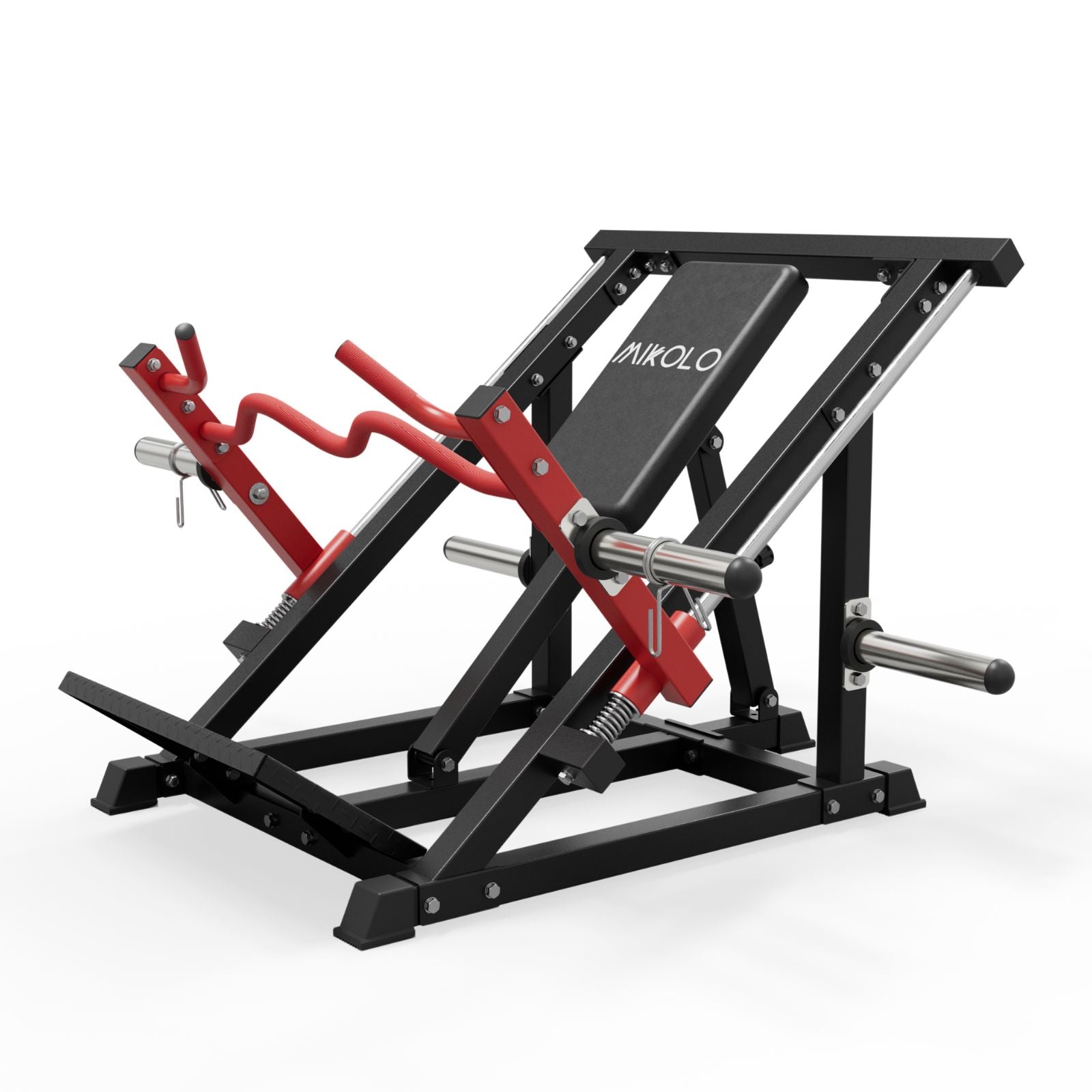








The leg press machine is a staple in lower-body strength training for good reason—it’s safe, effective, and versatile. But what many lifters overlook is how much the position of your feet on the platform can change which muscles are activated. Understanding different leg press stances isn't just about switching things up—it’s about training smarter, with more intention and balance.
Why Foot Placement Matters on the Leg Press
Your foot placement directly affects the range of motion, joint angles, and muscle recruitment during each rep. Small changes in your stance can shift emphasis between the quads, glutes, hamstrings, and even inner thighs.
Whether you’re training for hypertrophy, power, or muscular balance, learning different leg press positions can help you avoid plateaus and prevent overuse injuries.
1. Standard Stance (Shoulder-Width, Centered)
This is the go-to position for most lifters. Placing your feet shoulder-width apart and in the middle of the footplate provides a balanced engagement of the quads, glutes, and hamstrings. It's a solid foundation for building general lower-body strength.
Tip: Keep your knees in line with your toes and avoid locking them at the top of the movement.
2. High Foot Placement
Positioning your feet higher on the platform shifts the emphasis away from your quads and onto your glutes and hamstrings. This stance reduces knee stress and increases hip extension.
Best for: Building posterior chain strength and taking pressure off the knees.
3. Low Foot Placement
Placing your feet lower on the footplate increases the range of motion at the knees, putting more demand on the quads. It's a great option for quad-focused leg days.
Caution: This stance can place more stress on the knees, so avoid it if you have any knee issues.
4. Wide Stance (Sumo Style)
With feet placed wider than shoulder-width and toes slightly pointed out, the wide stance recruits more from the inner thighs (adductors) and glutes. It also allows for a deeper range of motion.
Use it when: You want to improve hip mobility and add more variety to your glute work.
5. Narrow Stance
Feet closer together—usually hip-width or less—puts more tension on the outer quads (vastus lateralis). It can also help refine your squat mechanics by reinforcing tight knee tracking.
Great for: Aesthetic quad shaping and correcting muscular imbalances.
6. Single-Leg Press
Using one leg at a time not only challenges your balance and stability but also reveals strength imbalances you might not notice during bilateral work. It allows for a more focused contraction and greater mind-muscle connection.
Tip: Start lighter than your usual weight and prioritize form over depth.
My Experience with Foot Placement Variations
When I first started training, I stuck to the standard stance for years—out of habit, not intention. It wasn’t until I dealt with recurring knee discomfort that a coach pointed me toward higher foot placements. The difference was immediate: less strain, more glute activation, and better progress overall. Over time, I began rotating stances based on my training goals: wide for glute days, low for quad burners, and single-leg work for injury prevention. It’s one of the simplest ways to make the leg press work harder for you.
Final Thoughts: Train with Purpose
The leg press isn’t just a machine—it’s a tool. And like any good tool, its effectiveness depends on how you use it. Varying your leg press stances keeps your workouts fresh, targets different muscle groups, and helps build a more balanced, injury-resistant lower body.
Experiment with different foot placements and pay close attention to how your body responds. Over time, you’ll develop not only stronger legs but a smarter, more intentional training approach.


Leave a comment
This site is protected by hCaptcha and the hCaptcha Privacy Policy and Terms of Service apply.