











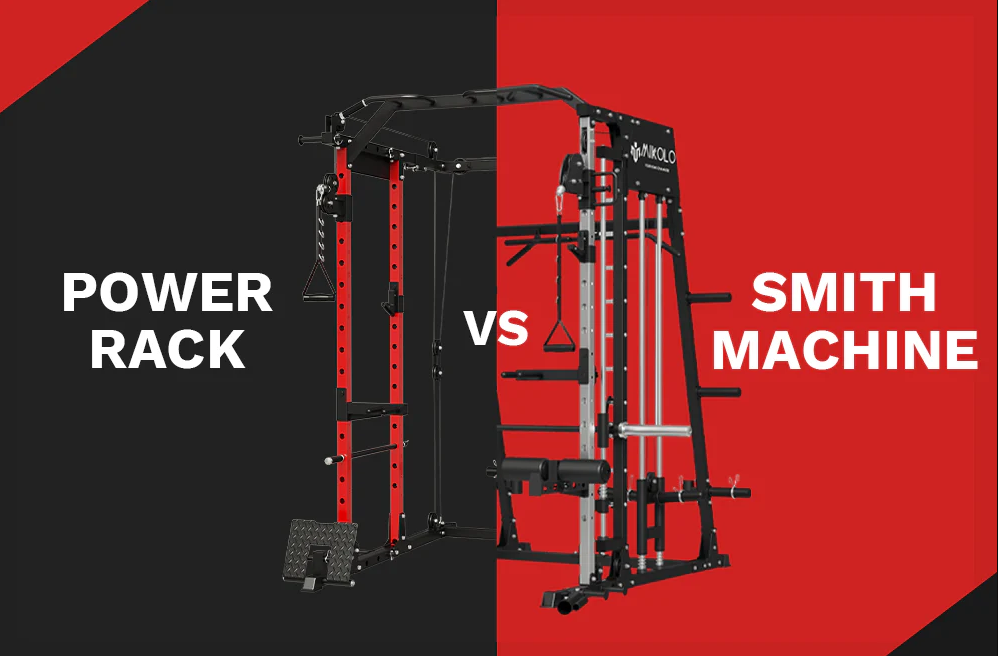
Full racks, half racks, and wall-mounted racks all solve different problems. Pick the wrong one, and you either waste space or limit your training.
This guide breaks it down clearly, so you can choose the right setup based on space, training style, and long-term goals.
Full Rack vs Half Rack vs Wall-Mount (Quick Comparison)
| Feature | Full Rack | Half Rack | Wall-Mount Rack |
|---|---|---|---|
| Footprint | Large (20–30 sq ft) | Medium (15–25 sq ft) | Minimal (wall-based) |
| Space Efficiency | Low | Balanced | Excellent |
| Safety (Solo Training) | Maximum | Moderate | Limited |
| Exercise Variety | Very High | High | Basic |
| Stability | Highest | High | Depends on wall |
| Best For | Serious lifters | Most home gyms | Small spaces |
1. Full Rack (Power Cage) — Maximum Capability
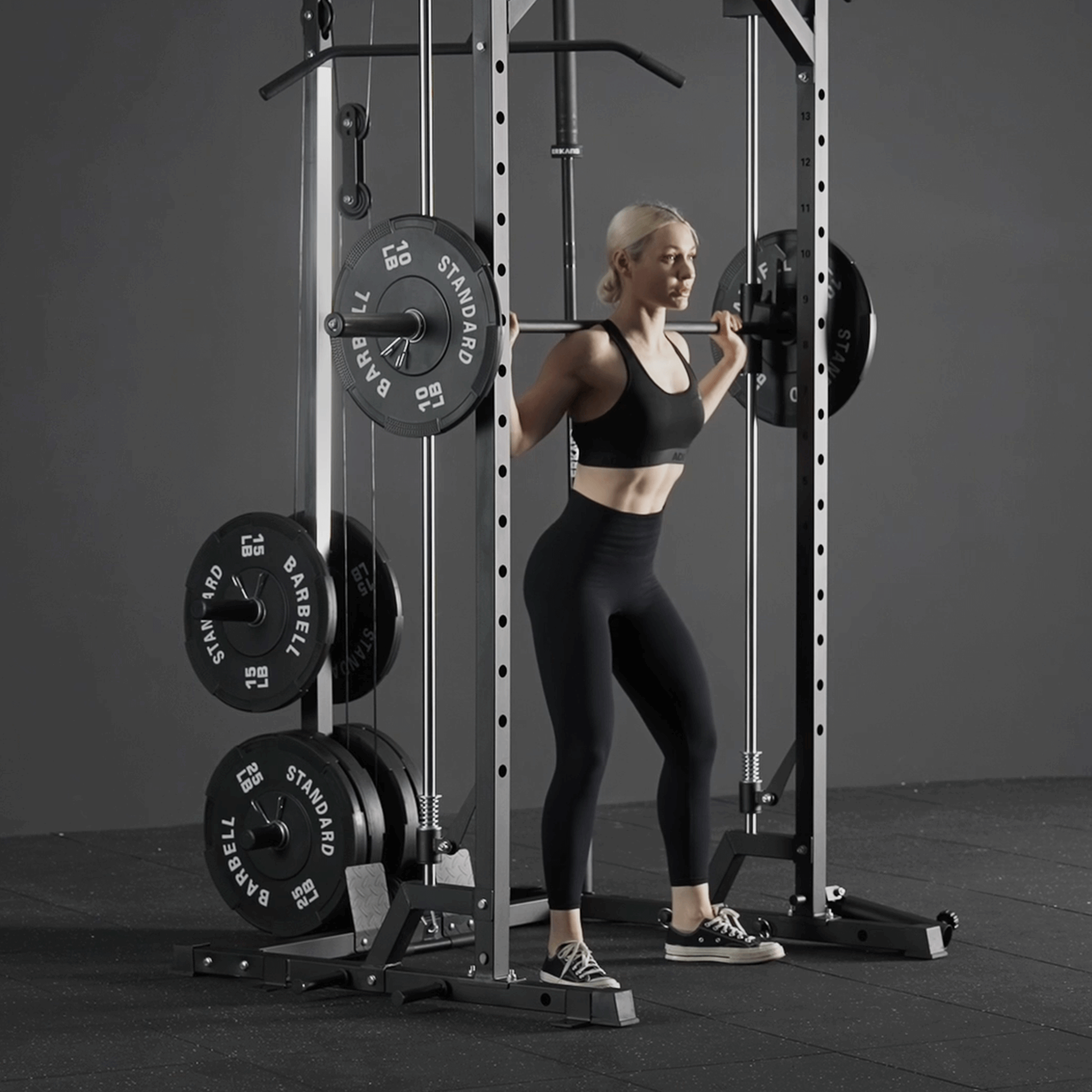
A full rack (also called a power cage) is the gold standard for strength training. You lift inside the cage, protected by safety bars, which makes it ideal for heavy training and solo workouts.
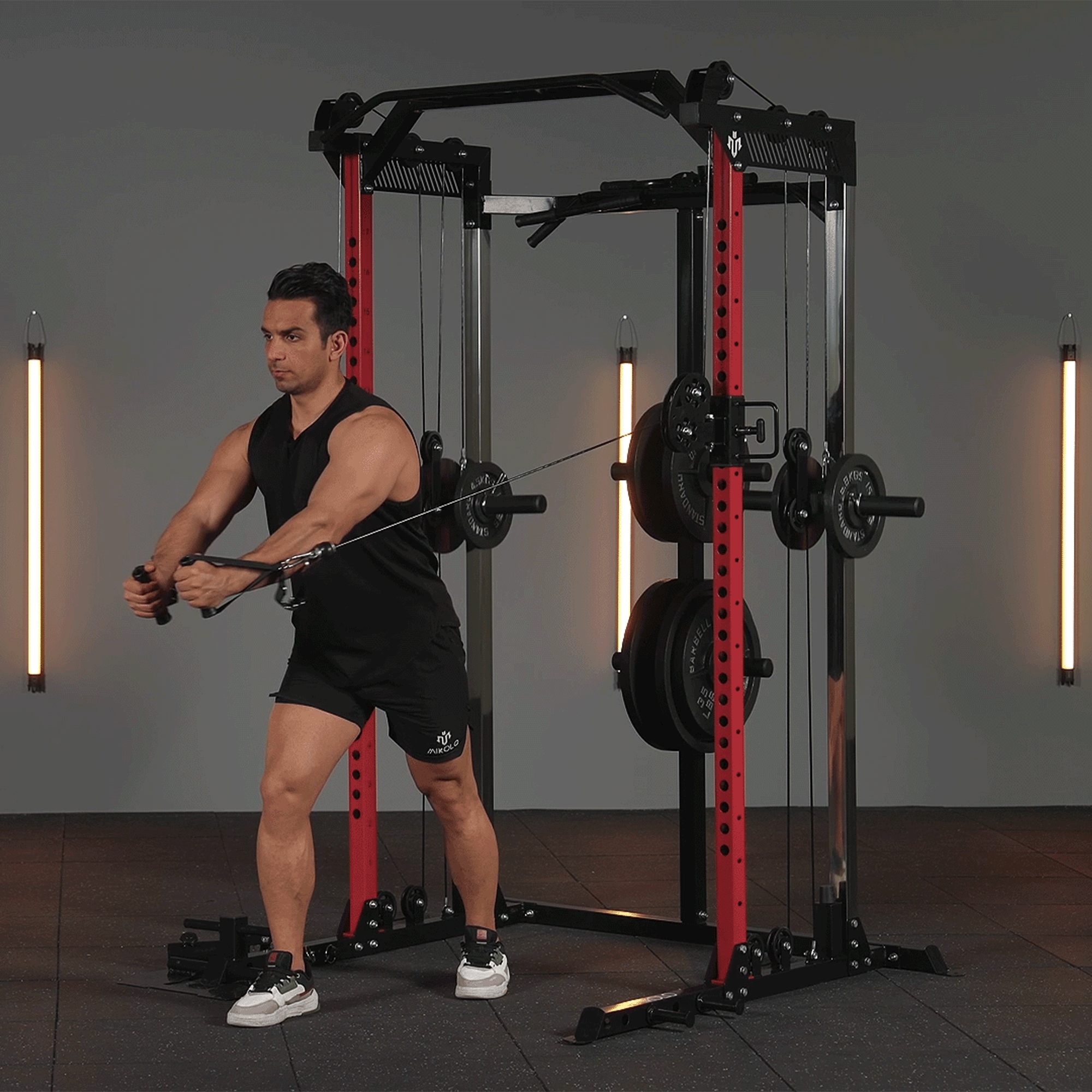
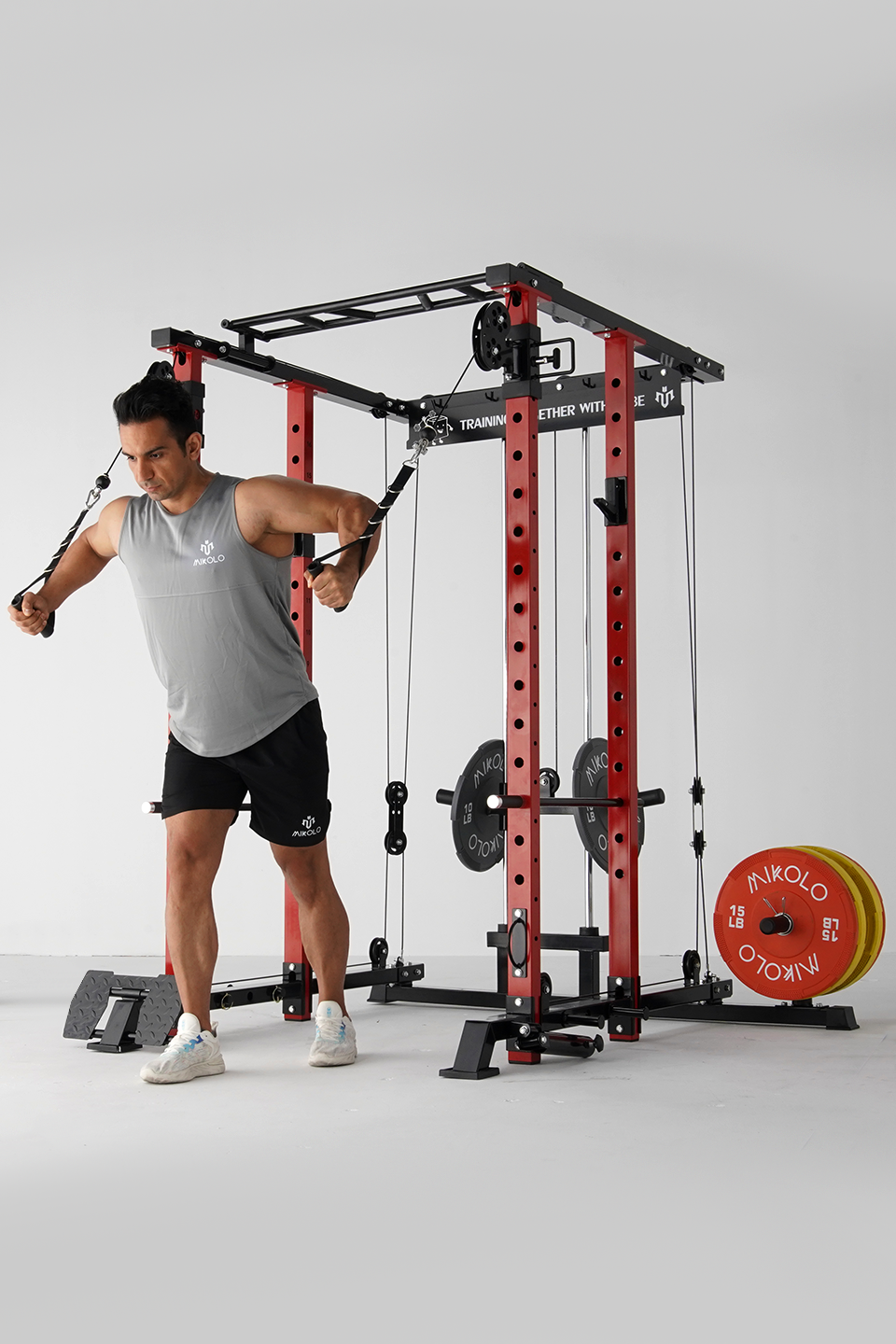
A strong example is the MIKOLO K6 2.0 Ultra All-in-One Power Rack Functional Trainer, which combines a traditional rack with a functional trainer system.
Modern full racks go beyond basic barbell training. They often include cable systems, pull-up bars, and multiple attachments, turning them into a complete home gym.
✓ Pros
- Safest option for solo training
- Supports all major compound lifts
- Upgradeable with attachments
✗ Cons
- Takes the most space
- Higher cost compared to other racks
2. Half Rack — The Smart Middle Ground
A half rack offers a balance between performance and space efficiency. Instead of training inside a cage, you lift in an open area with front spotter arms.
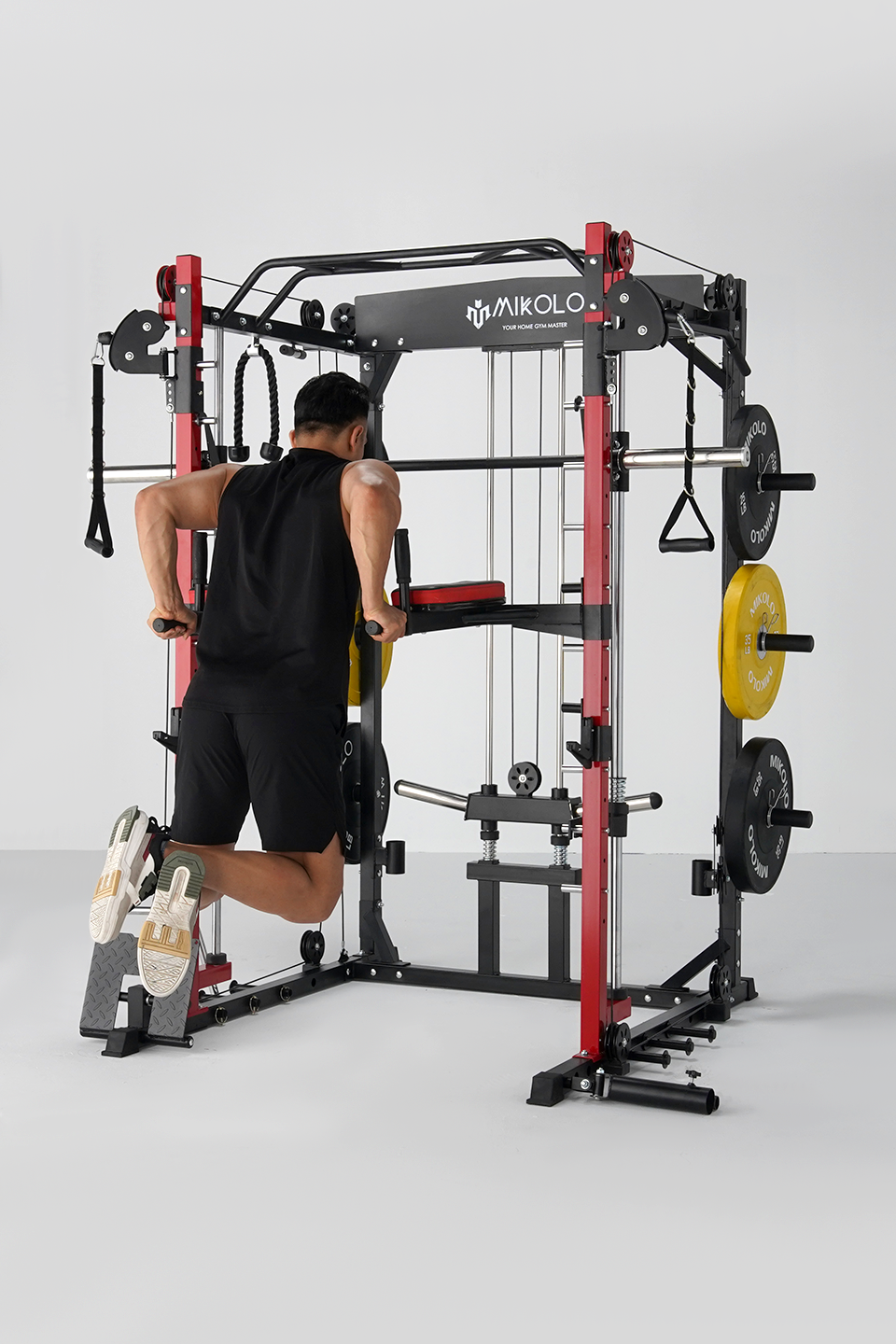
The MIKOLO HR05 Half Rack is a good example of how modern half racks combine compact size with strong functionality, including cable training options.
This design allows for easier movement and faster transitions between exercises, which many home gym users prefer.
✓ Pros
- Great balance of size and functionality
- Easier to fit into garages or smaller rooms
- More open workout space
✗ Cons
- Less safety compared to a full rack
- Fewer upgrade options than a full cage
3. Wall-Mounted Rack — Ultimate Space Saver
Wall-mounted racks are built for one purpose: saving space. They attach to the wall and often fold away when not in use, making them ideal for apartments or multi-purpose rooms.
The MIKOLO QJ Wall-Mounted Rack is designed for users who need a functional setup without taking up permanent floor space.
While they support basic barbell training, they are not as versatile as full or half racks.
✓ Pros
- Minimal footprint
- Foldable and space-saving
- More affordable
✗ Cons
- Limited exercise options
- Requires wall installation
- Lower stability compared to full racks
How to Choose (Real-World Decision Guide)
Instead of comparing specs endlessly, focus on these three questions:
1. How much space do you have?
- Garage or dedicated room → Full Rack
- Shared space → Half Rack
- Small room or apartment → Wall-Mount
2. How serious is your training?
- Heavy lifting and progression → Full Rack
- General strength training → Half Rack
- Basic workouts → Wall-Mount
3. Do you train alone?
- Yes → Full Rack (maximum safety)
- Sometimes → Half Rack
- Light training → Wall-Mount
Product Comparison (K6 vs HR05 vs QJ)
| Feature | K6 2.0 Power Rack | HR05 Half Rack | FOLDGYM™ Wall Rack |
|---|---|---|---|
| Image |  |
 |
 |
| Price | $799.99 - $2,799.99 | $549.99 - $1,749.99 | $249.99 - $1,499.99 |
| Type | Full Rack | Half Rack | Wall-Mount |
| Training Style | Inside cage | Open front | Wall-based |
| Cable System | ✅ Yes | ✅ Yes | ❌ No |
| Space Required | Large | Medium | Very small |
| Safety Level | ⭐⭐⭐⭐⭐ | ⭐⭐⭐⭐ | ⭐⭐⭐ |
| Best Use Case | Serious lifting | Most home gyms | Small space |
Final Verdict
- 🏆 Full Rack (K6 2.0) — Best for performance, safety, and long-term progression
- ⚖️ Half Rack (HR05) — Best balance of space and functionality
- 📌 Wall-Mount Rack (FOLDGYM™) — Best for saving space
If you're serious about training, choosing the right rack now will save you from upgrading later.


Leave a comment
This site is protected by hCaptcha and the hCaptcha Privacy Policy and Terms of Service apply.