









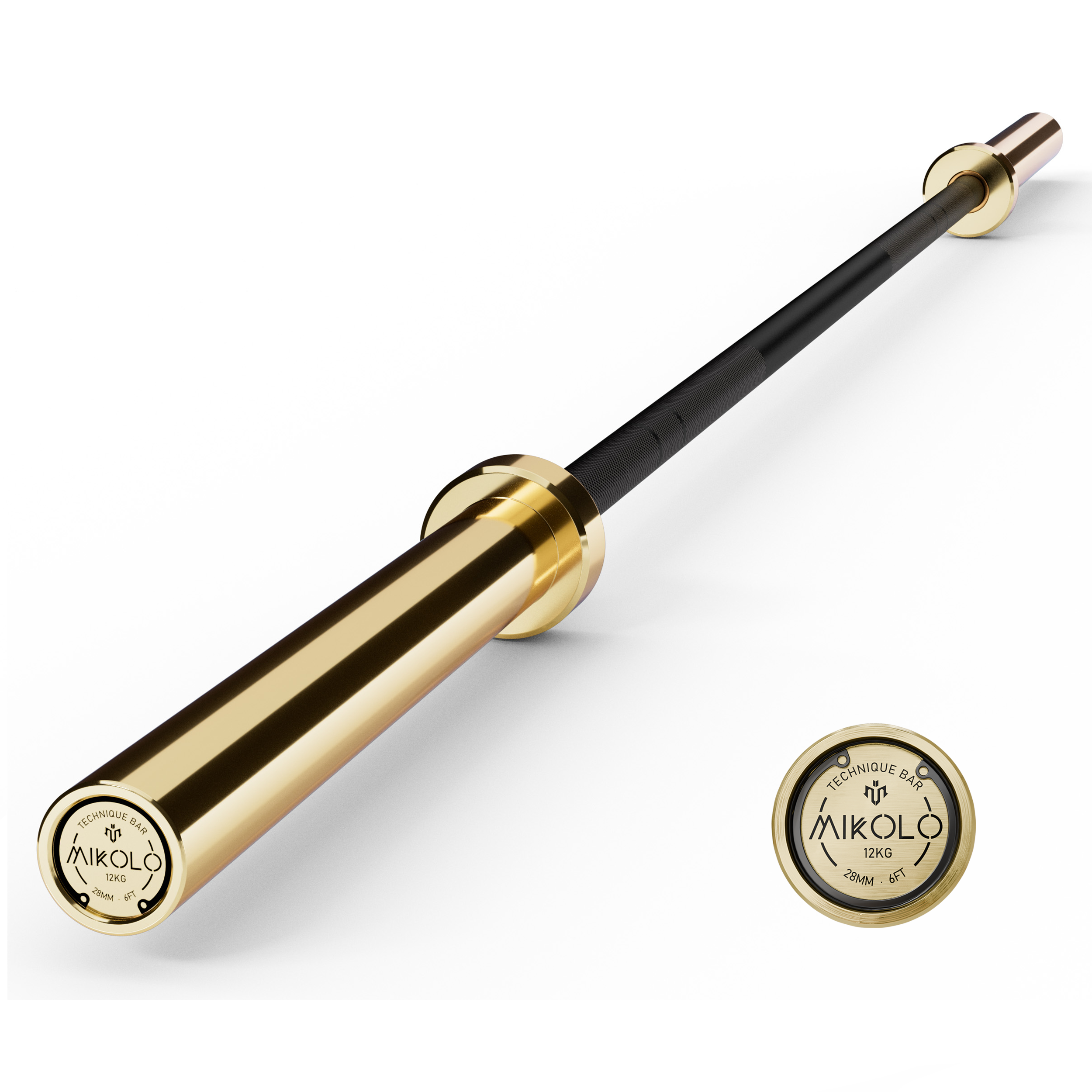




When it comes to building bigger, stronger biceps, few exercises are as iconic as curls. But there’s a classic question that every lifter faces: Should you use a barbell or dumbbells for curls? While both will grow your arms, understanding the differences can help you train smarter, avoid plateaus, and reduce injury risk.
The Benefits of Barbell Curls
Barbell curls allow you to lift heavier weights since both arms work together to stabilize the bar. This is excellent for progressive overload, which is key for muscle growth. The fixed grip can also help you maintain consistent wrist positioning, reducing strain during heavy sets.
Benefits include:
-
Lift heavier loads for mechanical tension.
-
Simple to set up and track progressive overload.
-
Great for building foundational bicep mass.
However, barbell curls can sometimes stress the wrists and elbows, especially if you have mobility limitations.
The Benefits of Dumbbell Curls
Dumbbell curls give you more freedom of movement, allowing your wrists and elbows to move naturally throughout the curl. This can help reduce joint stress and allow for a better mind-muscle connection.
Advantages:
-
Each arm works independently, helping correct muscle imbalances.
-
Freedom to rotate your wrists (supination), which can enhance peak contraction.
-
Reduced joint stress during curls.
While you typically use lighter weights with dumbbells, the improved range of motion and ability to adjust wrist positioning can stimulate the biceps effectively, especially when focusing on contraction and control.
EZ Curl Bar vs Dumbbells: A Middle Ground?
Many lifters consider the EZ curl bar a middle-ground option, offering wrist-friendly angles while still allowing bilateral lifting like a barbell. The semi-supinated grip reduces wrist strain and often feels more natural, making it a good option if you struggle with straight bar discomfort but still want to move heavier weights than you might with dumbbells.
Which Builds More Muscle: Barbell, Dumbbell, or EZ Bar?
All these variations build muscle effectively if you apply progressive overload, train with good form, and recover properly. The best choice often comes down to:
-
Your wrist and elbow comfort.
-
Whether you have strength imbalances.
-
Your specific training goals (mass vs. symmetry).
For example:
-
If your goal is maximum loading, barbell curls are excellent.
-
If your goal is symmetry and joint-friendly training, dumbbells excel.
-
If you want heavier loads with reduced wrist strain, the EZ curl bar is a great compromise.
Personal Experience: What Worked Best for My Clients
Over years of training clients, I’ve seen that many lifters benefit from rotating between barbell curls, dumbbell curls, and EZ bar curls throughout their training blocks. For instance, one client with wrist discomfort found that switching from straight bar curls to EZ bar curls allowed him to continue training heavy without pain. Another client struggling with uneven bicep development saw significant improvements by adding alternating dumbbell curls, ensuring each arm worked equally.
Combining different variations allows you to maximize growth, joint health, and long-term progress.
How to Structure Curls in Your Training
-
Use barbell or EZ bar curls as your primary heavy movement in your bicep workout.
-
Follow up with dumbbell curls to focus on contraction and address imbalances.
-
Incorporate different grips (supinated, neutral, hammer) over time to stimulate all heads of the biceps and brachialis.
Final Thoughts
Whether you choose barbell curls, dumbbell curls, or EZ bar curls, the key is consistent, focused training with proper form and progression. Each variation has its strengths:
✅ Barbell curls for heavy, consistent loading.
✅ Dumbbell curls for freedom and symmetry.
✅ EZ bar curls for comfort with moderate to heavy loads.
If you’re serious about building your biceps, consider using all three in your training rotation, allowing you to leverage the unique benefits of each while keeping your workouts effective and fresh.


Leave a comment
This site is protected by hCaptcha and the hCaptcha Privacy Policy and Terms of Service apply.